
Get trending papers in your email inbox once a day!
Get trending papers in your email inbox!
Subscribe
ImageRef-VL: Enabling Contextual Image Referencing in Vision-Language Models
Vision-Language Models (VLMs) have demonstrated remarkable capabilities in understanding multimodal inputs and have been widely integrated into Retrieval-Augmented Generation (RAG) based conversational systems. While current VLM-powered chatbots can provide textual source references in their responses, they exhibit significant limitations in referencing contextually relevant images during conversations. In this paper, we introduce Contextual Image Reference -- the ability to appropriately reference relevant images from retrieval documents based on conversation context -- and systematically investigate VLMs' capability in this aspect. We conduct the first evaluation for contextual image referencing, comprising a dedicated testing dataset and evaluation metrics. Furthermore, we propose ImageRef-VL, a method that significantly enhances open-source VLMs' image referencing capabilities through instruction fine-tuning on a large-scale, manually curated multimodal conversation dataset. Experimental results demonstrate that ImageRef-VL not only outperforms proprietary models but also achieves an 88% performance improvement over state-of-the-art open-source VLMs in contextual image referencing tasks. Our code is available at https://github.com/bytedance/ImageRef-VL.
LongEmotion: Measuring Emotional Intelligence of Large Language Models in Long-Context Interaction
Large language models (LLMs) make significant progress in Emotional Intelligence (EI) and long-context understanding. However, existing benchmarks tend to overlook certain aspects of EI in long-context scenarios, especially under realistic, practical settings where interactions are lengthy, diverse, and often noisy. To move towards such realistic settings, we present LongEmotion, a benchmark specifically designed for long-context EI tasks. It covers a diverse set of tasks, including Emotion Classification, Emotion Detection, Emotion QA, Emotion Conversation, Emotion Summary, and Emotion Expression. On average, the input length for these tasks reaches 8,777 tokens, with long-form generation required for Emotion Expression. To enhance performance under realistic constraints, we incorporate Retrieval-Augmented Generation (RAG) and Collaborative Emotional Modeling (CoEM), and compare them with standard prompt-based methods. Unlike conventional approaches, our RAG method leverages both the conversation context and the large language model itself as retrieval sources, avoiding reliance on external knowledge bases. The CoEM method further improves performance by decomposing the task into five stages, integrating both retrieval augmentation and limited knowledge injection. Experimental results show that both RAG and CoEM consistently enhance EI-related performance across most long-context tasks, advancing LLMs toward more practical and real-world EI applications. Furthermore, we conducted a comparative case study experiment on the GPT series to demonstrate the differences among various models in terms of EI. Code is available on GitHub at https://github.com/LongEmotion/LongEmotion, and the project page can be found at https://longemotion.github.io/.



Look before you Hop: Conversational Question Answering over Knowledge Graphs Using Judicious Context Expansion
Fact-centric information needs are rarely one-shot; users typically ask follow-up questions to explore a topic. In such a conversational setting, the user's inputs are often incomplete, with entities or predicates left out, and ungrammatical phrases. This poses a huge challenge to question answering (QA) systems that typically rely on cues in full-fledged interrogative sentences. As a solution, we develop CONVEX: an unsupervised method that can answer incomplete questions over a knowledge graph (KG) by maintaining conversation context using entities and predicates seen so far and automatically inferring missing or ambiguous pieces for follow-up questions. The core of our method is a graph exploration algorithm that judiciously expands a frontier to find candidate answers for the current question. To evaluate CONVEX, we release ConvQuestions, a crowdsourced benchmark with 11,200 distinct conversations from five different domains. We show that CONVEX: (i) adds conversational support to any stand-alone QA system, and (ii) outperforms state-of-the-art baselines and question completion strategies.
Question rewriting? Assessing its importance for conversational question answering
In conversational question answering, systems must correctly interpret the interconnected interactions and generate knowledgeable answers, which may require the retrieval of relevant information from a background repository. Recent approaches to this problem leverage neural language models, although different alternatives can be considered in terms of modules for (a) representing user questions in context, (b) retrieving the relevant background information, and (c) generating the answer. This work presents a conversational question answering system designed specifically for the Search-Oriented Conversational AI (SCAI) shared task, and reports on a detailed analysis of its question rewriting module. In particular, we considered different variations of the question rewriting module to evaluate the influence on the subsequent components, and performed a careful analysis of the results obtained with the best system configuration. Our system achieved the best performance in the shared task and our analysis emphasizes the importance of the conversation context representation for the overall system performance.
MTRAG: A Multi-Turn Conversational Benchmark for Evaluating Retrieval-Augmented Generation Systems
Retrieval-augmented generation (RAG) has recently become a very popular task for Large Language Models (LLMs). Evaluating them on multi-turn RAG conversations, where the system is asked to generate a response to a question in the context of a preceding conversation is an important and often overlooked task with several additional challenges. We present MTRAG: an end-to-end human-generated multi-turn RAG benchmark that reflects several real-world properties across diverse dimensions for evaluating the full RAG pipeline. MTRAG contains 110 conversations averaging 7.7 turns each across four domains for a total of 842 tasks. We also explore automation paths via synthetic data and LLM-as-a-Judge evaluation. Our human and automatic evaluations show that even state-of-the-art LLM RAG systems struggle on MTRAG. We demonstrate the need for strong retrieval and generation systems that can handle later turns, unanswerable questions, non-standalone questions, and multiple domains. MTRAG is available at https://github.com/ibm/mt-rag-benchmark.


Making Acoustic Side-Channel Attacks on Noisy Keyboards Viable with LLM-Assisted Spectrograms' "Typo" Correction
The large integration of microphones into devices increases the opportunities for Acoustic Side-Channel Attacks (ASCAs), as these can be used to capture keystrokes' audio signals that might reveal sensitive information. However, the current State-Of-The-Art (SOTA) models for ASCAs, including Convolutional Neural Networks (CNNs) and hybrid models, such as CoAtNet, still exhibit limited robustness under realistic noisy conditions. Solving this problem requires either: (i) an increased model's capacity to infer contextual information from longer sequences, allowing the model to learn that an initially noisily typed word is the same as a futurely collected non-noisy word, or (ii) an approach to fix misidentified information from the contexts, as one does not type random words, but the ones that best fit the conversation context. In this paper, we demonstrate that both strategies are viable and complementary solutions for making ASCAs practical. We observed that no existing solution leverages advanced transformer architectures' power for these tasks and propose that: (i) Visual Transformers (VTs) are the candidate solutions for capturing long-term contextual information and (ii) transformer-powered Large Language Models (LLMs) are the candidate solutions to fix the ``typos'' (mispredictions) the model might make. Thus, we here present the first-of-its-kind approach that integrates VTs and LLMs for ASCAs. We first show that VTs achieve SOTA performance in classifying keystrokes when compared to the previous CNN benchmark. Second, we demonstrate that LLMs can mitigate the impact of real-world noise. Evaluations on the natural sentences revealed that: (i) incorporating LLMs (e.g., GPT-4o) in our ASCA pipeline boosts the performance of error-correction tasks; and (ii) the comparable performance can be attained by a lightweight, fine-tuned smaller LLM (67 times smaller than GPT-4o), using...

Adaptive Retrieval-Augmented Generation for Conversational Systems
Despite the success of integrating large language models into the development of conversational systems, many studies have shown the effectiveness of retrieving and augmenting external knowledge for informative responses. Hence, many existing studies commonly assume the always need for Retrieval Augmented Generation (RAG) in a conversational system without explicit control. This raises a research question about such a necessity. In this study, we propose to investigate the need for each turn of system response to be augmented with external knowledge. In particular, by leveraging human judgements on the binary choice of adaptive augmentation, we develop RAGate, a gating model, which models conversation context and relevant inputs to predict if a conversational system requires RAG for improved responses. We conduct extensive experiments on devising and applying RAGate to conversational models and well-rounded analyses of different conversational scenarios. Our experimental results and analysis indicate the effective application of RAGate in RAG-based conversational systems in identifying system responses for appropriate RAG with high-quality responses and a high generation confidence. This study also identifies the correlation between the generation's confidence level and the relevance of the augmented knowledge.

PanoSent: A Panoptic Sextuple Extraction Benchmark for Multimodal Conversational Aspect-based Sentiment Analysis
While existing Aspect-based Sentiment Analysis (ABSA) has received extensive effort and advancement, there are still gaps in defining a more holistic research target seamlessly integrating multimodality, conversation context, fine-granularity, and also covering the changing sentiment dynamics as well as cognitive causal rationales. This paper bridges the gaps by introducing a multimodal conversational ABSA, where two novel subtasks are proposed: 1) Panoptic Sentiment Sextuple Extraction, panoramically recognizing holder, target, aspect, opinion, sentiment, rationale from multi-turn multi-party multimodal dialogue. 2) Sentiment Flipping Analysis, detecting the dynamic sentiment transformation throughout the conversation with the causal reasons. To benchmark the tasks, we construct PanoSent, a dataset annotated both manually and automatically, featuring high quality, large scale, multimodality, multilingualism, multi-scenarios, and covering both implicit and explicit sentiment elements. To effectively address the tasks, we devise a novel Chain-of-Sentiment reasoning framework, together with a novel multimodal large language model (namely Sentica) and a paraphrase-based verification mechanism. Extensive evaluations demonstrate the superiority of our methods over strong baselines, validating the efficacy of all our proposed methods. The work is expected to open up a new era for the ABSA community, and thus all our codes and data are open at https://PanoSent.github.io/


Rethinking Conversational Recommendations: Is Decision Tree All You Need?
Conversational recommender systems (CRS) dynamically obtain the user preferences via multi-turn questions and answers. The existing CRS solutions are widely dominated by deep reinforcement learning algorithms. However, deep reinforcement learning methods are often criticised for lacking interpretability and requiring a large amount of training data to perform. In this paper, we explore a simpler alternative and propose a decision tree based solution to CRS. The underlying challenge in CRS is that the same item can be described differently by different users. We show that decision trees are sufficient to characterize the interactions between users and items, and solve the key challenges in multi-turn CRS: namely which questions to ask, how to rank the candidate items, when to recommend, and how to handle negative feedback on the recommendations. Firstly, the training of decision trees enables us to find questions which effectively narrow down the search space. Secondly, by learning embeddings for each item and tree nodes, the candidate items can be ranked based on their similarity to the conversation context encoded by the tree nodes. Thirdly, the diversity of items associated with each tree node allows us to develop an early stopping strategy to decide when to make recommendations. Fourthly, when the user rejects a recommendation, we adaptively choose the next decision tree to improve subsequent questions and recommendations. Extensive experiments on three publicly available benchmark CRS datasets show that our approach provides significant improvement to the state of the art CRS methods.
Exploring Prompt-based Few-shot Learning for Grounded Dialog Generation
Dialog models can be greatly strengthened through grounding on various external information, but grounded dialog corpora are usually not naturally accessible. In this work, we focus on the few-shot learning for grounded dialog generation (GDG). We first propose a simple prompting method for GDG tasks, where different constructs of model input, such as the grounding source and the conversation context, are distinguished through continuous or discrete prompts. On three typical GDG tasks, we empirically demonstrate and analyze in-depth the effectiveness of our method. We then conduct extensive experiments to thoroughly investigate how our prompting method works with different pre-trained models. We show that prompted language models perform superiorly to conversational models, and further analyze various factors that influence the effects of prompting. Overall, our work introduces a prompt-based perspective to the few-shot learning for GDG tasks, and provides valuable findings and insights for future research.

PersonaEval: Are LLM Evaluators Human Enough to Judge Role-Play?
Current role-play studies often rely on unvalidated LLM-as-a-judge paradigms, which may fail to reflect how humans perceive role fidelity. A key prerequisite for human-aligned evaluation is role identification, the ability to recognize who is speaking based on dialogue context. We argue that any meaningful judgment of role-playing quality (how well a character is played) fundamentally depends on first correctly attributing words and actions to the correct persona (who is speaking). We present PersonaEval, the first benchmark designed to test whether LLM evaluators can reliably identify human roles. PersonaEval uses human-authored dialogues from novels, scripts, and video transcripts, challenging models to determine the correct persona according to the conversation context. Our experiments, including a human study, show that even the best-performing LLMs reach only around 69% accuracy, well below the level needed for reliable evaluation. In contrast, human participants perform near ceiling with 90.8% accuracy, highlighting that current LLM evaluators are still not human enough to effectively judge role-play scenarios. To better understand this gap, we examine training-time adaptation and test-time compute, suggesting that reliable evaluation requires more than task-specific tuning, but depends on strong, human-like reasoning abilities in LLM evaluators. We release our benchmark at https://github.com/maple-zhou/PersonaEval.


Emotion Recognition among Couples: A Survey
Couples' relationships affect the physical health and emotional well-being of partners. Automatically recognizing each partner's emotions could give a better understanding of their individual emotional well-being, enable interventions and provide clinical benefits. In the paper, we summarize and synthesize works that have focused on developing and evaluating systems to automatically recognize the emotions of each partner based on couples' interaction or conversation contexts. We identified 28 articles from IEEE, ACM, Web of Science, and Google Scholar that were published between 2010 and 2021. We detail the datasets, features, algorithms, evaluation, and results of each work as well as present main themes. We also discuss current challenges, research gaps and propose future research directions. In summary, most works have used audio data collected from the lab with annotations done by external experts and used supervised machine learning approaches for binary classification of positive and negative affect. Performance results leave room for improvement with significant research gaps such as no recognition using data from daily life. This survey will enable new researchers to get an overview of this field and eventually enable the development of emotion recognition systems to inform interventions to improve the emotional well-being of couples.
C2-CRS: Coarse-to-Fine Contrastive Learning for Conversational Recommender System
Conversational recommender systems (CRS) aim to recommend suitable items to users through natural language conversations. For developing effective CRSs, a major technical issue is how to accurately infer user preference from very limited conversation context. To address issue, a promising solution is to incorporate external data for enriching the context information. However, prior studies mainly focus on designing fusion models tailored for some specific type of external data, which is not general to model and utilize multi-type external data. To effectively leverage multi-type external data, we propose a novel coarse-to-fine contrastive learning framework to improve data semantic fusion for CRS. In our approach, we first extract and represent multi-grained semantic units from different data signals, and then align the associated multi-type semantic units in a coarse-to-fine way. To implement this framework, we design both coarse-grained and fine-grained procedures for modeling user preference, where the former focuses on more general, coarse-grained semantic fusion and the latter focuses on more specific, fine-grained semantic fusion. Such an approach can be extended to incorporate more kinds of external data. Extensive experiments on two public CRS datasets have demonstrated the effectiveness of our approach in both recommendation and conversation tasks.

Response Selection for Multi-Party Conversations with Dynamic Topic Tracking
While participants in a multi-party multi-turn conversation simultaneously engage in multiple conversation topics, existing response selection methods are developed mainly focusing on a two-party single-conversation scenario. Hence, the prolongation and transition of conversation topics are ignored by current methods. In this work, we frame response selection as a dynamic topic tracking task to match the topic between the response and relevant conversation context. With this new formulation, we propose a novel multi-task learning framework that supports efficient encoding through large pretrained models with only two utterances at once to perform dynamic topic disentanglement and response selection. We also propose Topic-BERT an essential pretraining step to embed topic information into BERT with self-supervised learning. Experimental results on the DSTC-8 Ubuntu IRC dataset show state-of-the-art results in response selection and topic disentanglement tasks outperforming existing methods by a good margin.

A Large Self-Annotated Corpus for Sarcasm
We introduce the Self-Annotated Reddit Corpus (SARC), a large corpus for sarcasm research and for training and evaluating systems for sarcasm detection. The corpus has 1.3 million sarcastic statements -- 10 times more than any previous dataset -- and many times more instances of non-sarcastic statements, allowing for learning in both balanced and unbalanced label regimes. Each statement is furthermore self-annotated -- sarcasm is labeled by the author, not an independent annotator -- and provided with user, topic, and conversation context. We evaluate the corpus for accuracy, construct benchmarks for sarcasm detection, and evaluate baseline methods.
EMNS /Imz/ Corpus: An emotive single-speaker dataset for narrative storytelling in games, television and graphic novels
The increasing adoption of text-to-speech technologies has led to a growing demand for natural and emotive voices that adapt to a conversation's context and emotional tone. The Emotive Narrative Storytelling (EMNS) corpus is a unique speech dataset created to enhance conversations' expressiveness and emotive quality in interactive narrative-driven systems. The corpus consists of a 2.3-hour recording featuring a female speaker delivering labelled utterances. It encompasses eight acted emotional states, evenly distributed with a variance of 0.68%, along with expressiveness levels and natural language descriptions with word emphasis labels. The evaluation of audio samples from different datasets revealed that the EMNS corpus achieved the highest average scores in accurately conveying emotions and demonstrating expressiveness. It outperformed other datasets in conveying shared emotions and achieved comparable levels of genuineness. A classification task confirmed the accurate representation of intended emotions in the corpus, with participants recognising the recordings as genuine and expressive. Additionally, the availability of the dataset collection tool under the Apache 2.0 License simplifies remote speech data collection for researchers.
MemAgent: Reshaping Long-Context LLM with Multi-Conv RL-based Memory Agent
Despite improvements by length extrapolation, efficient attention and memory modules, handling infinitely long documents with linear complexity without performance degradation during extrapolation remains the ultimate challenge in long-text processing. We directly optimize for long-text tasks in an end-to-end fashion and introduce a novel agent workflow, MemAgent, which reads text in segments and updates the memory using an overwrite strategy. We extend the DAPO algorithm to facilitate training via independent-context multi-conversation generation. MemAgent has demonstrated superb long-context capabilities, being able to extrapolate from an 8K context trained on 32K text to a 3.5M QA task with performance loss < 5% and achieves 95%+ in 512K RULER test.

MMChat: Multi-Modal Chat Dataset on Social Media
Incorporating multi-modal contexts in conversation is important for developing more engaging dialogue systems. In this work, we explore this direction by introducing MMChat: a large-scale Chinese multi-modal dialogue corpus (32.4M raw dialogues and 120.84K filtered dialogues). Unlike previous corpora that are crowd-sourced or collected from fictitious movies, MMChat contains image-grounded dialogues collected from real conversations on social media, in which the sparsity issue is observed. Specifically, image-initiated dialogues in common communications may deviate to some non-image-grounded topics as the conversation proceeds. To better investigate this issue, we manually annotate 100K dialogues from MMChat and further filter the corpus accordingly, which yields MMChat-hf. We develop a benchmark model to address the sparsity issue in dialogue generation tasks by adapting the attention routing mechanism on image features. Experiments demonstrate the usefulness of incorporating image features and the effectiveness of handling the sparsity of image features.
CoQAR: Question Rewriting on CoQA
Questions asked by humans during a conversation often contain contextual dependencies, i.e., explicit or implicit references to previous dialogue turns. These dependencies take the form of coreferences (e.g., via pronoun use) or ellipses, and can make the understanding difficult for automated systems. One way to facilitate the understanding and subsequent treatments of a question is to rewrite it into an out-of-context form, i.e., a form that can be understood without the conversational context. We propose CoQAR, a corpus containing 4.5K conversations from the Conversational Question-Answering dataset CoQA, for a total of 53K follow-up question-answer pairs. Each original question was manually annotated with at least 2 at most 3 out-of-context rewritings. CoQAR can be used in the supervised learning of three tasks: question paraphrasing, question rewriting and conversational question answering. In order to assess the quality of CoQAR's rewritings, we conduct several experiments consisting in training and evaluating models for these three tasks. Our results support the idea that question rewriting can be used as a preprocessing step for question answering models, thereby increasing their performances.
Dialog Inpainting: Turning Documents into Dialogs
Many important questions (e.g. "How to eat healthier?") require conversation to establish context and explore in depth. However, conversational question answering (ConvQA) systems have long been stymied by scarce training data that is expensive to collect. To address this problem, we propose a new technique for synthetically generating diverse and high-quality dialog data: dialog inpainting. Our approach takes the text of any document and transforms it into a two-person dialog between the writer and an imagined reader: we treat sentences from the article as utterances spoken by the writer, and then use a dialog inpainter to predict what the imagined reader asked or said in between each of the writer's utterances. By applying this approach to passages from Wikipedia and the web, we produce WikiDialog and WebDialog, two datasets totalling 19 million diverse information-seeking dialogs -- 1,000x larger than the largest existing ConvQA dataset. Furthermore, human raters judge the answer adequacy and conversationality of WikiDialog to be as good or better than existing manually-collected datasets. Using our inpainted data to pre-train ConvQA retrieval systems, we significantly advance state-of-the-art across three benchmarks (QReCC, OR-QuAC, TREC CAsT) yielding up to 40% relative gains on standard evaluation metrics.
CLEVR-Dialog: A Diagnostic Dataset for Multi-Round Reasoning in Visual Dialog
Visual Dialog is a multimodal task of answering a sequence of questions grounded in an image, using the conversation history as context. It entails challenges in vision, language, reasoning, and grounding. However, studying these subtasks in isolation on large, real datasets is infeasible as it requires prohibitively-expensive complete annotation of the 'state' of all images and dialogs. We develop CLEVR-Dialog, a large diagnostic dataset for studying multi-round reasoning in visual dialog. Specifically, we construct a dialog grammar that is grounded in the scene graphs of the images from the CLEVR dataset. This combination results in a dataset where all aspects of the visual dialog are fully annotated. In total, CLEVR-Dialog contains 5 instances of 10-round dialogs for about 85k CLEVR images, totaling to 4.25M question-answer pairs. We use CLEVR-Dialog to benchmark performance of standard visual dialog models; in particular, on visual coreference resolution (as a function of the coreference distance). This is the first analysis of its kind for visual dialog models that was not possible without this dataset. We hope the findings from CLEVR-Dialog will help inform the development of future models for visual dialog. Our dataset and code are publicly available.
CoMPM: Context Modeling with Speaker's Pre-trained Memory Tracking for Emotion Recognition in Conversation
As the use of interactive machines grow, the task of Emotion Recognition in Conversation (ERC) became more important. If the machine-generated sentences reflect emotion, more human-like sympathetic conversations are possible. Since emotion recognition in conversation is inaccurate if the previous utterances are not taken into account, many studies reflect the dialogue context to improve the performances. Many recent approaches show performance improvement by combining knowledge into modules learned from external structured data. However, structured data is difficult to access in non-English languages, making it difficult to extend to other languages. Therefore, we extract the pre-trained memory using the pre-trained language model as an extractor of external knowledge. We introduce CoMPM, which combines the speaker's pre-trained memory with the context model, and find that the pre-trained memory significantly improves the performance of the context model. CoMPM achieves the first or second performance on all data and is state-of-the-art among systems that do not leverage structured data. In addition, our method shows that it can be extended to other languages because structured knowledge is not required, unlike previous methods. Our code is available on github (https://github.com/rungjoo/CoMPM).
Compressed Context Memory For Online Language Model Interaction
This paper presents a novel context compression method for Transformer language models in online scenarios such as ChatGPT, where the context continually expands. As the context lengthens, the attention process requires more memory and computational resources, which in turn reduces the throughput of the language model. To this end, we propose a compressed context memory system that continually compresses the growing context into a compact memory space. The compression process simply involves integrating a lightweight conditional LoRA into the language model's forward pass during inference. Based on the compressed context memory, the language model can perform inference with reduced memory and attention operations. Through evaluations on conversation, personalization, and multi-task learning, we demonstrate that our approach achieves the performance level of a full context model with 5times smaller context memory space. Codes are available at https://github.com/snu-mllab/context-memory.


COGMEN: COntextualized GNN based Multimodal Emotion recognitioN
Emotions are an inherent part of human interactions, and consequently, it is imperative to develop AI systems that understand and recognize human emotions. During a conversation involving various people, a person's emotions are influenced by the other speaker's utterances and their own emotional state over the utterances. In this paper, we propose COntextualized Graph Neural Network based Multimodal Emotion recognitioN (COGMEN) system that leverages local information (i.e., inter/intra dependency between speakers) and global information (context). The proposed model uses Graph Neural Network (GNN) based architecture to model the complex dependencies (local and global information) in a conversation. Our model gives state-of-the-art (SOTA) results on IEMOCAP and MOSEI datasets, and detailed ablation experiments show the importance of modeling information at both levels.
Conversation Chronicles: Towards Diverse Temporal and Relational Dynamics in Multi-Session Conversations
In the field of natural language processing, open-domain chatbots have emerged as an important research topic. However, a major limitation of existing open-domain chatbot research is its singular focus on short single-session dialogue, neglecting the potential need for understanding contextual information in multiple consecutive sessions that precede an ongoing dialogue. Among the elements that compose the context in multi-session conversation settings, the time intervals between sessions and the relationships between speakers would be particularly important. Despite their importance, current research efforts have not sufficiently addressed these dialogical components. In this paper, we introduce a new 1M multi-session dialogue dataset, called Conversation Chronicles, for implementing a long-term conversation setup in which time intervals and fine-grained speaker relationships are incorporated. Following recent works, we exploit a large language model to produce the data. The extensive human evaluation shows that dialogue episodes in Conversation Chronicles reflect those properties while maintaining coherent and consistent interactions across all the sessions. We also propose a dialogue model, called ReBot, which consists of chronological summarization and dialogue generation modules using only around 630M parameters. When trained on Conversation Chronicles, ReBot demonstrates long-term context understanding with a high human engagement score.

Effective and Efficient Conversation Retrieval for Dialogue State Tracking with Implicit Text Summaries
Few-shot dialogue state tracking (DST) with Large Language Models (LLM) relies on an effective and efficient conversation retriever to find similar in-context examples for prompt learning. Previous works use raw dialogue context as search keys and queries, and a retriever is fine-tuned with annotated dialogues to achieve superior performance. However, the approach is less suited for scaling to new domains or new annotation languages, where fine-tuning data is unavailable. To address this problem, we handle the task of conversation retrieval based on text summaries of the conversations. A LLM-based conversation summarizer is adopted for query and key generation, which enables effective maximum inner product search. To avoid the extra inference cost brought by LLM-based conversation summarization, we further distill a light-weight conversation encoder which produces query embeddings without decoding summaries for test conversations. We validate our retrieval approach on MultiWOZ datasets with GPT-Neo-2.7B and LLaMA-7B/30B. The experimental results show a significant improvement over relevant baselines in real few-shot DST settings.

A Context-based Approach for Dialogue Act Recognition using Simple Recurrent Neural Networks
Dialogue act recognition is an important part of natural language understanding. We investigate the way dialogue act corpora are annotated and the learning approaches used so far. We find that the dialogue act is context-sensitive within the conversation for most of the classes. Nevertheless, previous models of dialogue act classification work on the utterance-level and only very few consider context. We propose a novel context-based learning method to classify dialogue acts using a character-level language model utterance representation, and we notice significant improvement. We evaluate this method on the Switchboard Dialogue Act corpus, and our results show that the consideration of the preceding utterances as a context of the current utterance improves dialogue act detection.
Summary of a Haystack: A Challenge to Long-Context LLMs and RAG Systems
LLMs and RAG systems are now capable of handling millions of input tokens or more. However, evaluating the output quality of such systems on long-context tasks remains challenging, as tasks like Needle-in-a-Haystack lack complexity. In this work, we argue that summarization can play a central role in such evaluation. We design a procedure to synthesize Haystacks of documents, ensuring that specific insights repeat across documents. The "Summary of a Haystack" (SummHay) task then requires a system to process the Haystack and generate, given a query, a summary that identifies the relevant insights and precisely cites the source documents. Since we have precise knowledge of what insights should appear in a haystack summary and what documents should be cited, we implement a highly reproducible automatic evaluation that can score summaries on two aspects - Coverage and Citation. We generate Haystacks in two domains (conversation, news), and perform a large-scale evaluation of 10 LLMs and corresponding 50 RAG systems. Our findings indicate that SummHay is an open challenge for current systems, as even systems provided with an Oracle signal of document relevance lag our estimate of human performance (56\%) by 10+ points on a Joint Score. Without a retriever, long-context LLMs like GPT-4o and Claude 3 Opus score below 20% on SummHay. We show SummHay can also be used to study enterprise RAG systems and position bias in long-context models. We hope future systems can equal and surpass human performance on SummHay.




Task-Oriented Dialogue with In-Context Learning
We describe a system for building task-oriented dialogue systems combining the in-context learning abilities of large language models (LLMs) with the deterministic execution of business logic. LLMs are used to translate between the surface form of the conversation and a domain-specific language (DSL) which is used to progress the business logic. We compare our approach to the intent-based NLU approach predominantly used in industry today. Our experiments show that developing chatbots with our system requires significantly less effort than established approaches, that these chatbots can successfully navigate complex dialogues which are extremely challenging for NLU-based systems, and that our system has desirable properties for scaling task-oriented dialogue systems to a large number of tasks. We make our implementation available for use and further study.

Document-aligned Japanese-English Conversation Parallel Corpus
Sentence-level (SL) machine translation (MT) has reached acceptable quality for many high-resourced languages, but not document-level (DL) MT, which is difficult to 1) train with little amount of DL data; and 2) evaluate, as the main methods and data sets focus on SL evaluation. To address the first issue, we present a document-aligned Japanese-English conversation corpus, including balanced, high-quality business conversation data for tuning and testing. As for the second issue, we manually identify the main areas where SL MT fails to produce adequate translations in lack of context. We then create an evaluation set where these phenomena are annotated to alleviate automatic evaluation of DL systems. We train MT models using our corpus to demonstrate how using context leads to improvements.

VisCon-100K: Leveraging Contextual Web Data for Fine-tuning Vision Language Models
Vision-language models (VLMs) excel in various visual benchmarks but are often constrained by the lack of high-quality visual fine-tuning data. To address this challenge, we introduce VisCon-100K, a novel dataset derived from interleaved image-text web documents. Our approach transforms 45K web documents from the OBELICS dataset into 100K image conversation samples. We utilize GPT-4V to generate image-contextual captions and OpenChat 3.5 model to convert these captions into diverse free-form and multiple-choice question-answer pairs. Integrating this dataset for fine-tuning considerably enhances VLM performance across multiple benchmarks. Unlike methods that focus solely on fine-grained visual content, our approach leverages accompanying web context, yielding superior results. We also discover that a `leaky modality mix,' where conversation samples contain questions answerable from both the image and its contextual caption, outperforms non-leaky combinations of captions and Q\&A pairs. VisCon-100k dataset shows strong performance with two popular VLM approaches: text-only large language model (LLM) aligned with a vision encoder using image captions data (ShareGPT4V-7b) and multimodally pretrained LLM (IDEFICS2-8b) using interleaved image-text data. In addition to releasing the VisCon-100K dataset, we provide a contextual captioner trained on this dataset, facilitating scalable fine-tuning data generation for future research and open-source applications. Using the same pipeline, but substituting our trained contextual captioner for GPT-4V, we also release the larger VisCon-1M dataset.

CHIQ: Contextual History Enhancement for Improving Query Rewriting in Conversational Search
In this paper, we study how open-source large language models (LLMs) can be effectively deployed for improving query rewriting in conversational search, especially for ambiguous queries. We introduce CHIQ, a two-step method that leverages the capabilities of LLMs to resolve ambiguities in the conversation history before query rewriting. This approach contrasts with prior studies that predominantly use closed-source LLMs to directly generate search queries from conversation history. We demonstrate on five well-established benchmarks that CHIQ leads to state-of-the-art results across most settings, showing highly competitive performances with systems leveraging closed-source LLMs. Our study provides a first step towards leveraging open-source LLMs in conversational search, as a competitive alternative to the prevailing reliance on commercial LLMs. Data, models, and source code will be publicly available upon acceptance at https://github.com/fengranMark/CHIQ.


MultiVerse: A Multi-Turn Conversation Benchmark for Evaluating Large Vision and Language Models
Vision-and-Language Models (VLMs) have shown impressive capabilities on single-turn benchmarks, yet real-world applications often demand more intricate multi-turn dialogues. Existing multi-turn datasets (e.g, MMDU, ConvBench) only partially capture the breadth and depth of conversational scenarios encountered by users. In this work, we introduce MultiVerse, a novel multi-turn conversation benchmark featuring 647 dialogues - each averaging four turns - derived from a diverse set of 12 popular VLM evaluation benchmarks. With 484 tasks and 484 interaction goals, MultiVerse covers a wide range of topics, from factual knowledge and perception to advanced reasoning tasks such as mathematics and coding. To facilitate robust assessment, we propose a checklist-based evaluation method that leverages GPT-4o as the automated evaluator, measuring performance across 37 key aspects, including perceptual accuracy, linguistic clarity, and factual correctness. We evaluate 18 VLMs on MultiVerse, revealing that even the strongest models (e.g., GPT-4o) achieve only a 50% success rate in complex multi-turn conversations, highlighting the dataset's challenging nature. Notably, we find that providing full dialogue context significantly enhances performance for smaller or weaker models, emphasizing the importance of in-context learning. We believe MultiVerse is a landscape of evaluating multi-turn interaction abilities for VLMs.
Temporal Context Awareness: A Defense Framework Against Multi-turn Manipulation Attacks on Large Language Models
Large Language Models (LLMs) are increasingly vulnerable to sophisticated multi-turn manipulation attacks, where adversaries strategically build context through seemingly benign conversational turns to circumvent safety measures and elicit harmful or unauthorized responses. These attacks exploit the temporal nature of dialogue to evade single-turn detection methods, representing a critical security vulnerability with significant implications for real-world deployments. This paper introduces the Temporal Context Awareness (TCA) framework, a novel defense mechanism designed to address this challenge by continuously analyzing semantic drift, cross-turn intention consistency and evolving conversational patterns. The TCA framework integrates dynamic context embedding analysis, cross-turn consistency verification, and progressive risk scoring to detect and mitigate manipulation attempts effectively. Preliminary evaluations on simulated adversarial scenarios demonstrate the framework's potential to identify subtle manipulation patterns often missed by traditional detection techniques, offering a much-needed layer of security for conversational AI systems. In addition to outlining the design of TCA , we analyze diverse attack vectors and their progression across multi-turn conversation, providing valuable insights into adversarial tactics and their impact on LLM vulnerabilities. Our findings underscore the pressing need for robust, context-aware defenses in conversational AI systems and highlight TCA framework as a promising direction for securing LLMs while preserving their utility in legitimate applications. We make our implementation available to support further research in this emerging area of AI security.
Conversation AI Dialog for Medicare powered by Finetuning and Retrieval Augmented Generation
Large language models (LLMs) have shown impressive capabilities in natural language processing tasks, including dialogue generation. This research aims to conduct a novel comparative analysis of two prominent techniques, fine-tuning with LoRA (Low-Rank Adaptation) and the Retrieval-Augmented Generation (RAG) framework, in the context of doctor-patient chat conversations with multiple datasets of mixed medical domains. The analysis involves three state-of-the-art models: Llama-2, GPT, and the LSTM model. Employing real-world doctor-patient dialogues, we comprehensively evaluate the performance of models, assessing key metrics such as language quality (perplexity, BLEU score), factual accuracy (fact-checking against medical knowledge bases), adherence to medical guidelines, and overall human judgments (coherence, empathy, safety). The findings provide insights into the strengths and limitations of each approach, shedding light on their suitability for healthcare applications. Furthermore, the research investigates the robustness of the models in handling diverse patient queries, ranging from general health inquiries to specific medical conditions. The impact of domain-specific knowledge integration is also explored, highlighting the potential for enhancing LLM performance through targeted data augmentation and retrieval strategies.
Unlocking Context Constraints of LLMs: Enhancing Context Efficiency of LLMs with Self-Information-Based Content Filtering
Large language models (LLMs) have received significant attention by achieving remarkable performance across various tasks. However, their fixed context length poses challenges when processing long documents or maintaining extended conversations. This paper proposes a method called Selective Context that employs self-information to filter out less informative content, thereby enhancing the efficiency of the fixed context length. We demonstrate the effectiveness of our approach on tasks of summarisation and question answering across different data sources, including academic papers, news articles, and conversation transcripts.
EmoBERTa: Speaker-Aware Emotion Recognition in Conversation with RoBERTa
We present EmoBERTa: Speaker-Aware Emotion Recognition in Conversation with RoBERTa, a simple yet expressive scheme of solving the ERC (emotion recognition in conversation) task. By simply prepending speaker names to utterances and inserting separation tokens between the utterances in a dialogue, EmoBERTa can learn intra- and inter- speaker states and context to predict the emotion of a current speaker, in an end-to-end manner. Our experiments show that we reach a new state of the art on the two popular ERC datasets using a basic and straight-forward approach. We've open sourced our code and models at https://github.com/tae898/erc.
Modeling Multi-turn Conversation with Deep Utterance Aggregation
Multi-turn conversation understanding is a major challenge for building intelligent dialogue systems. This work focuses on retrieval-based response matching for multi-turn conversation whose related work simply concatenates the conversation utterances, ignoring the interactions among previous utterances for context modeling. In this paper, we formulate previous utterances into context using a proposed deep utterance aggregation model to form a fine-grained context representation. In detail, a self-matching attention is first introduced to route the vital information in each utterance. Then the model matches a response with each refined utterance and the final matching score is obtained after attentive turns aggregation. Experimental results show our model outperforms the state-of-the-art methods on three multi-turn conversation benchmarks, including a newly introduced e-commerce dialogue corpus.
CHAMPAGNE: Learning Real-world Conversation from Large-Scale Web Videos
Visual information is central to conversation: body gestures and physical behaviour, for example, contribute to meaning that transcends words alone. To date, however, most neural conversational models are limited to just text. We introduce CHAMPAGNE, a generative model of conversations that can account for visual contexts. To train CHAMPAGNE, we collect and release YTD-18M, a large-scale corpus of 18M video-based dialogues. YTD-18M is constructed from web videos: crucial to our data collection pipeline is a pretrained language model that converts error-prone automatic transcripts to a cleaner dialogue format while maintaining meaning. Human evaluation reveals that YTD-18M is more sensible and specific than prior resources (MMDialog, 1M dialogues), while maintaining visual-groundedness. Experiments demonstrate that 1) CHAMPAGNE learns to conduct conversation from YTD-18M; and 2) when fine-tuned, it achieves state-of-the-art results on four vision-language tasks focused on real-world conversations. We release data, models, and code.
SODA: Million-scale Dialogue Distillation with Social Commonsense Contextualization
We present SODA: the first publicly available, million-scale high-quality social dialogue dataset. Using SODA, we train COSMO: a generalizable conversation agent outperforming previous best-performing agents on both in- and out-of-domain datasets. In contrast to most existing crowdsourced, small-scale dialogue corpora, we distill 1.5M socially-grounded dialogues from a pre-trained language model (InstructGPT; Ouyang et al., 2022). Dialogues are distilled by contextualizing social commonsense knowledge from a knowledge graph (Atomic10x; West et al., 2022). Human evaluation shows that dialogues in SODA are more consistent, specific, and (surprisingly) natural than prior human-authored datasets - e.g., DailyDialog (Li et al., 2017), BlendedSkillTalk (Smith et al., 2020). In addition, extensive evaluations show that COSMO is significantly more natural and consistent on unseen datasets than best-performing dialogue models - e.g., GODEL (Peng et al., 2022), BlenderBot (Roller et al., 2021), DialoGPT (Zhang et al., 2020). Furthermore, it is sometimes even preferred to the original human-written gold responses. We make our data, models, and code public.

Friends-MMC: A Dataset for Multi-modal Multi-party Conversation Understanding
Multi-modal multi-party conversation (MMC) is a less studied yet important topic of research due to that it well fits real-world scenarios and thus potentially has more widely-used applications. Compared with the traditional multi-modal conversations, MMC requires stronger character-centered understanding abilities as there are many interlocutors appearing in both the visual and textual context. To facilitate the study of this problem, we present Friends-MMC in this paper, an MMC dataset that contains 24,000+ unique utterances paired with video context. To explore the character-centered understanding of the dialogue, we also annotate the speaker of each utterance, the names and bounding bboxes of faces that appear in the video. Based on this Friends-MMC dataset, we further study two fundamental MMC tasks: conversation speaker identification and conversation response prediction, both of which have the multi-party nature with the video or image as visual context. For conversation speaker identification, we demonstrate the inefficiencies of existing methods such as pre-trained models, and propose a simple yet effective baseline method that leverages an optimization solver to utilize the context of two modalities to achieve better performance. For conversation response prediction, we fine-tune generative dialogue models on Friend-MMC, and analyze the benefits of speaker information. The code and dataset is publicly available at https://github.com/yellow-binary-tree/Friends-MMC and thus we call for more attention on modeling speaker information when understanding conversations.


Toward Multi-Session Personalized Conversation: A Large-Scale Dataset and Hierarchical Tree Framework for Implicit Reasoning
There has been a surge in the use of large language models (LLM) conversational agents to generate responses based on long-term history from multiple sessions. However, existing long-term open-domain dialogue datasets lack complex, real-world personalization and fail to capture implicit reasoning-where relevant information is embedded in subtle, syntactic, or semantically distant connections rather than explicit statements. In such cases, traditional retrieval methods fail to capture relevant context, and long-context modeling also becomes inefficient due to numerous complicated persona-related details. To address this gap, we introduce ImplexConv, a large-scale long-term dataset with 2,500 examples, each containing approximately 100 conversation sessions, designed to study implicit reasoning in personalized dialogues. Additionally, we propose TaciTree, a novel hierarchical tree framework that structures conversation history into multiple levels of summarization. Instead of brute-force searching all data, TaciTree enables an efficient, level-based retrieval process where models refine their search by progressively selecting relevant details. Our experiments demonstrate that TaciTree significantly improves the ability of LLMs to reason over long-term conversations with implicit contextual dependencies.


MultiChallenge: A Realistic Multi-Turn Conversation Evaluation Benchmark Challenging to Frontier LLMs
We present MultiChallenge, a pioneering benchmark evaluating large language models (LLMs) on conducting multi-turn conversations with human users, a crucial yet underexamined capability for their applications. MultiChallenge identifies four categories of challenges in multi-turn conversations that are not only common and realistic among current human-LLM interactions, but are also challenging to all current frontier LLMs. All 4 challenges require accurate instruction-following, context allocation, and in-context reasoning at the same time. We also develop LLM as judge with instance-level rubrics to facilitate an automatic evaluation method with fair agreement with experienced human raters. Despite achieving near-perfect scores on existing multi-turn evaluation benchmarks, all frontier models have less than 50% accuracy on MultiChallenge, with the top-performing Claude 3.5 Sonnet (June 2024) achieving just a 41.4% average accuracy.
Compressing Lengthy Context With UltraGist
Compressing lengthy context is a critical but technically challenging problem. In this paper, we propose a new method called UltraGist, which is distinguished for its high-quality compression of lengthy context due to the innovative design of the compression and learning algorithm. UltraGist brings forth the following important benefits. Firstly, it notably contributes to the flexibility of compression, as it can be effectively learned to support a broad range of context lengths and compression ratios. Secondly, it helps to produce fine-grained compression for the lengthy context, where each small segment of the context is progressively processed on top of a tailored cross-attention mechanism. Thirdly, it makes the training process sample-efficient and thus maximizes the use of training data. Finally, it facilitates the efficient running of compression for dynamic context, as the compression result can be progressively generated and hence incrementally updated. UltraGist is evaluated on a wide variety of tasks associated with lengthy context, such as document QA and summarization, few-shot learning, multi-session conversation, et al. Whilst the existing methods fail to handle these challenging scenarios, our approach is able to preserve a near-lossless compression performance throughout all the evaluations. Our data, model, and code have been released at https://github.com/namespace-Pt/UltraGist.

Target-Guided Open-Domain Conversation Planning
Prior studies addressing target-oriented conversational tasks lack a crucial notion that has been intensively studied in the context of goal-oriented artificial intelligence agents, namely, planning. In this study, we propose the task of Target-Guided Open-Domain Conversation Planning (TGCP) task to evaluate whether neural conversational agents have goal-oriented conversation planning abilities. Using the TGCP task, we investigate the conversation planning abilities of existing retrieval models and recent strong generative models. The experimental results reveal the challenges facing current technology.
BERT-CoQAC: BERT-based Conversational Question Answering in Context
As one promising way to inquire about any particular information through a dialog with the bot, question answering dialog systems have gained increasing research interests recently. Designing interactive QA systems has always been a challenging task in natural language processing and used as a benchmark to evaluate a machine's ability of natural language understanding. However, such systems often struggle when the question answering is carried out in multiple turns by the users to seek more information based on what they have already learned, thus, giving rise to another complicated form called Conversational Question Answering (CQA). CQA systems are often criticized for not understanding or utilizing the previous context of the conversation when answering the questions. To address the research gap, in this paper, we explore how to integrate conversational history into the neural machine comprehension system. On one hand, we introduce a framework based on a publically available pre-trained language model called BERT for incorporating history turns into the system. On the other hand, we propose a history selection mechanism that selects the turns that are relevant and contributes the most to answer the current question. Experimentation results revealed that our framework is comparable in performance with the state-of-the-art models on the QuAC leader board. We also conduct a number of experiments to show the side effects of using entire context information which brings unnecessary information and noise signals resulting in a decline in the model's performance.
Generative Adapter: Contextualizing Language Models in Parameters with A Single Forward Pass
Large language models (LMs) are typically adapted to improve performance on new contexts (\eg text prompts that define new tasks or domains) through fine-tuning or prompting. However, there is an accuracy compute tradeoff -- fine-tuning incurs significant training cost and prompting increases inference overhead. We introduce GenerativeAdapter, an effective and efficient adaptation method that directly maps new contexts to low-rank LM adapters, thereby significantly reducing inference overhead with no need for finetuning. The adapter generator is trained via self-supervised learning, and can be used to adapt a single frozen LM for any new task simply by mapping the associated task or domain context to a new adapter. We apply GenerativeAdapter to two pretrained LMs (Mistral-7B-Instruct and Llama2-7B-Chat) and evaluate the adapted models in three adaption scenarios: knowledge acquisition from documents, learning from demonstrations, and personalization for users. In StreamingQA, our approach is effective in injecting knowledge into the LM's parameters, achieving a 63.5% improvement in F1 score over the model with supervised fine-tuning (from 19.5 to 31.5) for contexts as long as 32K tokens. In the MetaICL in-context learning evaluation, our method achieves an average accuracy of 44.9 across 26 tasks, outperforming the base model. On MSC, our method proves to be highly competitive in memorizing user information from conversations with a 4x reduction in computation and memory costs compared to prompting with full conversation history. Together, these results suggest that GenerativeAdapter should allow for general adaption to a wide range of different contexts.

Enhancing Emotion Recognition in Conversation through Emotional Cross-Modal Fusion and Inter-class Contrastive Learning
The purpose of emotion recognition in conversation (ERC) is to identify the emotion category of an utterance based on contextual information. Previous ERC methods relied on simple connections for cross-modal fusion and ignored the information differences between modalities, resulting in the model being unable to focus on modality-specific emotional information. At the same time, the shared information between modalities was not processed to generate emotions. Information redundancy problem. To overcome these limitations, we propose a cross-modal fusion emotion prediction network based on vector connections. The network mainly includes two stages: the multi-modal feature fusion stage based on connection vectors and the emotion classification stage based on fused features. Furthermore, we design a supervised inter-class contrastive learning module based on emotion labels. Experimental results confirm the effectiveness of the proposed method, demonstrating excellent performance on the IEMOCAP and MELD datasets.
LLAMAPIE: Proactive In-Ear Conversation Assistants
We introduce LlamaPIE, the first real-time proactive assistant designed to enhance human conversations through discreet, concise guidance delivered via hearable devices. Unlike traditional language models that require explicit user invocation, this assistant operates in the background, anticipating user needs without interrupting conversations. We address several challenges, including determining when to respond, crafting concise responses that enhance conversations, leveraging knowledge of the user for context-aware assistance, and real-time, on-device processing. To achieve this, we construct a semi-synthetic dialogue dataset and propose a two-model pipeline: a small model that decides when to respond and a larger model that generates the response. We evaluate our approach on real-world datasets, demonstrating its effectiveness in providing helpful, unobtrusive assistance. User studies with our assistant, implemented on Apple Silicon M2 hardware, show a strong preference for the proactive assistant over both a baseline with no assistance and a reactive model, highlighting the potential of LlamaPie to enhance live conversations.


REALTALK: A 21-Day Real-World Dataset for Long-Term Conversation
Long-term, open-domain dialogue capabilities are essential for chatbots aiming to recall past interactions and demonstrate emotional intelligence (EI). Yet, most existing research relies on synthetic, LLM-generated data, leaving open questions about real-world conversational patterns. To address this gap, we introduce REALTALK, a 21-day corpus of authentic messaging app dialogues, providing a direct benchmark against genuine human interactions. We first conduct a dataset analysis, focusing on EI attributes and persona consistency to understand the unique challenges posed by real-world dialogues. By comparing with LLM-generated conversations, we highlight key differences, including diverse emotional expressions and variations in persona stability that synthetic dialogues often fail to capture. Building on these insights, we introduce two benchmark tasks: (1) persona simulation where a model continues a conversation on behalf of a specific user given prior dialogue context; and (2) memory probing where a model answers targeted questions requiring long-term memory of past interactions. Our findings reveal that models struggle to simulate a user solely from dialogue history, while fine-tuning on specific user chats improves persona emulation. Additionally, existing models face significant challenges in recalling and leveraging long-term context within real-world conversations.

Toward Conversational Agents with Context and Time Sensitive Long-term Memory
There has recently been growing interest in conversational agents with long-term memory which has led to the rapid development of language models that use retrieval-augmented generation (RAG). Until recently, most work on RAG has focused on information retrieval from large databases of texts, like Wikipedia, rather than information from long-form conversations. In this paper, we argue that effective retrieval from long-form conversational data faces two unique problems compared to static database retrieval: 1) time/event-based queries, which requires the model to retrieve information about previous conversations based on time or the order of a conversational event (e.g., the third conversation on Tuesday), and 2) ambiguous queries that require surrounding conversational context to understand. To better develop RAG-based agents that can deal with these challenges, we generate a new dataset of ambiguous and time-based questions that build upon a recent dataset of long-form, simulated conversations, and demonstrate that standard RAG based approaches handle such questions poorly. We then develop a novel retrieval model which combines chained-of-table search methods, standard vector-database retrieval, and a prompting method to disambiguate queries, and demonstrate that this approach substantially improves over current methods at solving these tasks. We believe that this new dataset and more advanced RAG agent can act as a key benchmark and stepping stone towards effective memory augmented conversational agents that can be used in a wide variety of AI applications.

Trapping LLM Hallucinations Using Tagged Context Prompts
Recent advances in large language models (LLMs), such as ChatGPT, have led to highly sophisticated conversation agents. However, these models suffer from "hallucinations," where the model generates false or fabricated information. Addressing this challenge is crucial, particularly with AI-driven platforms being adopted across various sectors. In this paper, we propose a novel method to recognize and flag instances when LLMs perform outside their domain knowledge, and ensuring users receive accurate information. We find that the use of context combined with embedded tags can successfully combat hallucinations within generative language models. To do this, we baseline hallucination frequency in no-context prompt-response pairs using generated URLs as easily-tested indicators of fabricated data. We observed a significant reduction in overall hallucination when context was supplied along with question prompts for tested generative engines. Lastly, we evaluated how placing tags within contexts impacted model responses and were able to eliminate hallucinations in responses with 98.88% effectiveness.

STAR: SQL Guided Pre-Training for Context-dependent Text-to-SQL Parsing
In this paper, we propose a novel SQL guided pre-training framework STAR for context-dependent text-to-SQL parsing, which leverages contextual information to enrich natural language (NL) utterance and table schema representations for text-to-SQL conversations. Concretely, we propose two novel pre-training objectives which respectively explore the context-dependent interactions of NL utterances and SQL queries within each text-to-SQL conversation: (i) schema state tracking (SST) objective that tracks and explores the schema states of context-dependent SQL queries in the form of schema-states by predicting and updating the value of each schema slot during interaction; (ii) utterance dependency tracking (UDT) objective that employs weighted contrastive learning to pull together two semantically similar NL utterances and push away the representations of semantically dissimilar NL utterances within each conversation. In addition, we construct a high-quality large-scale context-dependent text-to-SQL conversation corpus to pre-train STAR. Extensive experiments show that STAR achieves new state-of-the-art performance on two downstream benchmarks (SParC and CoSQL), significantly outperforming previous pre-training methods and ranking first on the leaderboard. We believe the release of the constructed corpus, codebase and pre-trained STAR checkpoints would push forward the research in this area. For reproducibility, we release our code and data at https://github.com/AlibabaResearch/DAMO-ConvAI/tree/main/star.
Pay More Attention to History: A Context Modelling Strategy for Conversational Text-to-SQL
Conversational text-to-SQL aims at converting multi-turn natural language queries into their corresponding SQL (Structured Query Language) representations. One of the most intractable problems of conversational text-to-SQL is modelling the semantics of multi-turn queries and gathering the proper information required for the current query. This paper shows that explicitly modelling the semantic changes by adding each turn and the summarization of the whole context can bring better performance on converting conversational queries into SQLs. In particular, we propose two conversational modelling tasks in both turn grain and conversation grain. These two tasks simply work as auxiliary training tasks to help with multi-turn conversational semantic parsing. We conducted empirical studies and achieved new state-of-the-art results on the large-scale open-domain conversational text-to-SQL dataset. The results demonstrate that the proposed mechanism significantly improves the performance of multi-turn semantic parsing.
Stark: Social Long-Term Multi-Modal Conversation with Persona Commonsense Knowledge
Humans share a wide variety of images related to their personal experiences within conversations via instant messaging tools. However, existing works focus on (1) image-sharing behavior in singular sessions, leading to limited long-term social interaction, and (2) a lack of personalized image-sharing behavior. In this work, we introduce Stark, a large-scale long-term multi-modal conversation dataset that covers a wide range of social personas in a multi-modality format, time intervals, and images. To construct Stark automatically, we propose a novel multi-modal contextualization framework, Mcu, that generates long-term multi-modal dialogue distilled from ChatGPT and our proposed Plan-and-Execute image aligner. Using our Stark, we train a multi-modal conversation model, Ultron 7B, which demonstrates impressive visual imagination ability. Furthermore, we demonstrate the effectiveness of our dataset in human evaluation. We make our source code and dataset publicly available.




Thread of Thought Unraveling Chaotic Contexts
Large Language Models (LLMs) have ushered in a transformative era in the field of natural language processing, excelling in tasks related to text comprehension and generation. Nevertheless, they encounter difficulties when confronted with chaotic contexts (e.g., distractors rather than long irrelevant context), leading to the inadvertent omission of certain details within the chaotic context. In response to these challenges, we introduce the "Thread of Thought" (ThoT) strategy, which draws inspiration from human cognitive processes. ThoT systematically segments and analyzes extended contexts while adeptly selecting pertinent information. This strategy serves as a versatile "plug-and-play" module, seamlessly integrating with various LLMs and prompting techniques. In the experiments, we utilize the PopQA and EntityQ datasets, as well as a Multi-Turn Conversation Response dataset (MTCR) we collected, to illustrate that ThoT significantly improves reasoning performance compared to other prompting techniques.


Finding Diamonds in Conversation Haystacks: A Benchmark for Conversational Data Retrieval
We present the Conversational Data Retrieval (CDR) benchmark, the first comprehensive test set for evaluating systems that retrieve conversation data for product insights. With 1.6k queries across five analytical tasks and 9.1k conversations, our benchmark provides a reliable standard for measuring conversational data retrieval performance. Our evaluation of 16 popular embedding models shows that even the best models reach only around NDCG@10 of 0.51, revealing a substantial gap between document and conversational data retrieval capabilities. Our work identifies unique challenges in conversational data retrieval (implicit state recognition, turn dynamics, contextual references) while providing practical query templates and detailed error analysis across different task categories. The benchmark dataset and code are available at https://github.com/l-yohai/CDR-Benchmark.

Retrieval Augmentation Reduces Hallucination in Conversation
Despite showing increasingly human-like conversational abilities, state-of-the-art dialogue models often suffer from factual incorrectness and hallucination of knowledge (Roller et al., 2020). In this work we explore the use of neural-retrieval-in-the-loop architectures - recently shown to be effective in open-domain QA (Lewis et al., 2020b; Izacard and Grave, 2020) - for knowledge-grounded dialogue, a task that is arguably more challenging as it requires querying based on complex multi-turn dialogue context and generating conversationally coherent responses. We study various types of architectures with multiple components - retrievers, rankers, and encoder-decoders - with the goal of maximizing knowledgeability while retaining conversational ability. We demonstrate that our best models obtain state-of-the-art performance on two knowledge-grounded conversational tasks. The models exhibit open-domain conversational capabilities, generalize effectively to scenarios not within the training data, and, as verified by human evaluations, substantially reduce the well-known problem of knowledge hallucination in state-of-the-art chatbots.
Difference-aware Knowledge Selection for Knowledge-grounded Conversation Generation
In a multi-turn knowledge-grounded dialog, the difference between the knowledge selected at different turns usually provides potential clues to knowledge selection, which has been largely neglected in previous research. In this paper, we propose a difference-aware knowledge selection method. It first computes the difference between the candidate knowledge sentences provided at the current turn and those chosen in the previous turns. Then, the differential information is fused with or disentangled from the contextual information to facilitate final knowledge selection. Automatic, human observational, and interactive evaluation shows that our method is able to select knowledge more accurately and generate more informative responses, significantly outperforming the state-of-the-art baselines. The codes are available at https://github.com/chujiezheng/DiffKS.

MemoryPrompt: A Light Wrapper to Improve Context Tracking in Pre-trained Language Models
Transformer-based language models (LMs) track contextual information through large, hard-coded input windows. We introduce MemoryPrompt, a leaner approach in which the LM is complemented by a small auxiliary recurrent network that passes information to the LM by prefixing its regular input with a sequence of vectors, akin to soft prompts, without requiring LM finetuning. Tested on a task designed to probe a LM's ability to keep track of multiple fact updates, a MemoryPrompt-augmented LM outperforms much larger LMs that have access to the full input history. We also test MemoryPrompt on a long-distance dialogue dataset, where its performance is comparable to that of a model conditioned on the entire conversation history. In both experiments we also observe that, unlike full-finetuning approaches, MemoryPrompt does not suffer from catastrophic forgetting when adapted to new tasks, thus not disrupting the generalist capabilities of the underlying LM.

EmotionIC: Emotional Inertia and Contagion-driven Dependency Modelling for Emotion Recognition in Conversation
Emotion Recognition in Conversation (ERC) has attracted growing attention in recent years as a result of the advancement and implementation of human-computer interface technologies. However, previous approaches to modeling global and local context dependencies lost the diversity of dependency information and do not take the context dependency into account at the classification level. In this paper, we propose a novel approach to dependency modeling driven by Emotional Inertia and Contagion (EmotionIC) for conversational emotion recognition at the feature extraction and classification levels. At the feature extraction level, our designed Identity Masked Multi-head Attention (IM-MHA) captures the identity-based long-distant context in the dialogue to contain the diverse influence of different participants and construct the global emotional atmosphere, while the devised Dialogue-based Gate Recurrent Unit (DialogGRU) that aggregates the emotional tendencies of dyadic dialogue is applied to refine the contextual features with inter- and intra-speaker dependencies. At the classification level, by introducing skip connections in Conditional Random Field (CRF), we elaborate the Skip-chain CRF (SkipCRF) to capture the high-order dependencies within and between speakers, and to emulate the emotional flow of distant participants. Experimental results show that our method can significantly outperform the state-of-the-art models on four benchmark datasets. The ablation studies confirm that our modules can effectively model emotional inertia and contagion.
Control Globally, Understand Locally: A Global-to-Local Hierarchical Graph Network for Emotional Support Conversation
Emotional support conversation aims at reducing the emotional distress of the help-seeker, which is a new and challenging task. It requires the system to explore the cause of help-seeker's emotional distress and understand their psychological intention to provide supportive responses. However, existing methods mainly focus on the sequential contextual information, ignoring the hierarchical relationships with the global cause and local psychological intention behind conversations, thus leads to a weak ability of emotional support. In this paper, we propose a Global-to-Local Hierarchical Graph Network to capture the multi-source information (global cause, local intentions and dialog history) and model hierarchical relationships between them, which consists of a multi-source encoder, a hierarchical graph reasoner, and a global-guide decoder. Furthermore, a novel training objective is designed to monitor semantic information of the global cause. Experimental results on the emotional support conversation dataset, ESConv, confirm that the proposed GLHG has achieved the state-of-the-art performance on the automatic and human evaluations. The code will be released in here \small{~https://github.com/pengwei-iie/GLHG}.
Supervised Prototypical Contrastive Learning for Emotion Recognition in Conversation
Capturing emotions within a conversation plays an essential role in modern dialogue systems. However, the weak correlation between emotions and semantics brings many challenges to emotion recognition in conversation (ERC). Even semantically similar utterances, the emotion may vary drastically depending on contexts or speakers. In this paper, we propose a Supervised Prototypical Contrastive Learning (SPCL) loss for the ERC task. Leveraging the Prototypical Network, the SPCL targets at solving the imbalanced classification problem through contrastive learning and does not require a large batch size. Meanwhile, we design a difficulty measure function based on the distance between classes and introduce curriculum learning to alleviate the impact of extreme samples. We achieve state-of-the-art results on three widely used benchmarks. Further, we conduct analytical experiments to demonstrate the effectiveness of our proposed SPCL and curriculum learning strategy. We release the code at https://github.com/caskcsg/SPCL.
OpenViDial 2.0: A Larger-Scale, Open-Domain Dialogue Generation Dataset with Visual Contexts
In order to better simulate the real human conversation process, models need to generate dialogue utterances based on not only preceding textual contexts but also visual contexts. However, with the development of multi-modal dialogue learning, the dataset scale gradually becomes a bottleneck. In this report, we release OpenViDial 2.0, a larger-scale open-domain multi-modal dialogue dataset compared to the previous version OpenViDial 1.0. OpenViDial 2.0 contains a total number of 5.6 million dialogue turns extracted from either movies or TV series from different resources, and each dialogue turn is paired with its corresponding visual context. We hope this large-scale dataset can help facilitate future researches on open-domain multi-modal dialog generation, e.g., multi-modal pretraining for dialogue generation.

A Large-Scale Corpus for Conversation Disentanglement
Disentangling conversations mixed together in a single stream of messages is a difficult task, made harder by the lack of large manually annotated datasets. We created a new dataset of 77,563 messages manually annotated with reply-structure graphs that both disentangle conversations and define internal conversation structure. Our dataset is 16 times larger than all previously released datasets combined, the first to include adjudication of annotation disagreements, and the first to include context. We use our data to re-examine prior work, in particular, finding that 80% of conversations in a widely used dialogue corpus are either missing messages or contain extra messages. Our manually-annotated data presents an opportunity to develop robust data-driven methods for conversation disentanglement, which will help advance dialogue research.

End-to-end Conversation Modeling Track in DSTC6
End-to-end training of neural networks is a promising approach to automatic construction of dialog systems using a human-to-human dialog corpus. Recently, Vinyals et al. tested neural conversation models using OpenSubtitles. Lowe et al. released the Ubuntu Dialogue Corpus for researching unstructured multi-turn dialogue systems. Furthermore, the approach has been extended to accomplish task oriented dialogs to provide information properly with natural conversation. For example, Ghazvininejad et al. proposed a knowledge grounded neural conversation model [3], where the research is aiming at combining conversational dialogs with task-oriented knowledge using unstructured data such as Twitter data for conversation and Foursquare data for external knowledge.However, the task is still limited to a restaurant information service, and has not yet been tested with a wide variety of dialog tasks. In addition, it is still unclear how to create intelligent dialog systems that can respond like a human agent. In consideration of these problems, we proposed a challenge track to the 6th dialog system technology challenges (DSTC6) using human-to-human dialog data to mimic human dialog behaviors. The focus of the challenge track is to train end-to-end conversation models from human-to-human conversation and accomplish end-to-end dialog tasks in various situations assuming a customer service, in which a system plays a role of human agent and generates natural and informative sentences in response to user's questions or comments given dialog context.
LoCoBench-Agent: An Interactive Benchmark for LLM Agents in Long-Context Software Engineering
As large language models (LLMs) evolve into sophisticated autonomous agents capable of complex software development tasks, evaluating their real-world capabilities becomes critical. While existing benchmarks like LoCoBench~qiu2025locobench assess long-context code understanding, they focus on single-turn evaluation and cannot capture the multi-turn interactive nature, tool usage patterns, and adaptive reasoning required by real-world coding agents. We introduce LoCoBench-Agent, a comprehensive evaluation framework specifically designed to assess LLM agents in realistic, long-context software engineering workflows. Our framework extends LoCoBench's 8,000 scenarios into interactive agent environments, enabling systematic evaluation of multi-turn conversations, tool usage efficiency, error recovery, and architectural consistency across extended development sessions. We also introduce an evaluation methodology with 9 metrics across comprehension and efficiency dimensions. Our framework provides agents with 8 specialized tools (file operations, search, code analysis) and evaluates them across context lengths ranging from 10K to 1M tokens, enabling precise assessment of long-context performance. Through systematic evaluation of state-of-the-art models, we reveal several key findings: (1) agents exhibit remarkable long-context robustness; (2) comprehension-efficiency trade-off exists with negative correlation, where thorough exploration increases comprehension but reduces efficiency; and (3) conversation efficiency varies dramatically across models, with strategic tool usage patterns differentiating high-performing agents. As the first long-context LLM agent benchmark for software engineering, LoCoBench-Agent establishes a rigorous foundation for measuring agent capabilities, identifying performance gaps, and advancing autonomous software development at scale.

Conversational Co-Speech Gesture Generation via Modeling Dialog Intention, Emotion, and Context with Diffusion Models
Audio-driven co-speech human gesture generation has made remarkable advancements recently. However, most previous works only focus on single person audio-driven gesture generation. We aim at solving the problem of conversational co-speech gesture generation that considers multiple participants in a conversation, which is a novel and challenging task due to the difficulty of simultaneously incorporating semantic information and other relevant features from both the primary speaker and the interlocutor. To this end, we propose CoDiffuseGesture, a diffusion model-based approach for speech-driven interaction gesture generation via modeling bilateral conversational intention, emotion, and semantic context. Our method synthesizes appropriate interactive, speech-matched, high-quality gestures for conversational motions through the intention perception module and emotion reasoning module at the sentence level by a pretrained language model. Experimental results demonstrate the promising performance of the proposed method.
Abduct, Act, Predict: Scaffolding Causal Inference for Automated Failure Attribution in Multi-Agent Systems
Failure attribution in multi-agent systems -- pinpointing the exact step where a decisive error occurs -- is a critical yet unsolved challenge. Current methods treat this as a pattern recognition task over long conversation logs, leading to critically low step-level accuracy (below 17\%), which renders them impractical for debugging complex systems. Their core weakness is a fundamental inability to perform robust counterfactual reasoning: to determine if correcting a single action would have actually averted the task failure. To bridge this counterfactual inference gap, we introduce Abduct-Act-Predict (A2P) Scaffolding, a novel agent framework that transforms failure attribution from pattern recognition into a structured causal inference task. A2P explicitly guides a large language model through a formal three-step reasoning process within a single inference pass: (1) Abduction, to infer the hidden root causes behind an agent's actions; (2) Action, to define a minimal corrective intervention; and (3) Prediction, to simulate the subsequent trajectory and verify if the intervention resolves the failure. This structured approach leverages the holistic context of the entire conversation while imposing a rigorous causal logic on the model's analysis. Our extensive experiments on the Who\&When benchmark demonstrate its efficacy. On the Algorithm-Generated dataset, A2P achieves 47.46\% step-level accuracy, a 2.85times improvement over the 16.67\% of the baseline. On the more complex Hand-Crafted dataset, it achieves 29.31\% step accuracy, a 2.43times improvement over the baseline's 12.07\%. By reframing the problem through a causal lens, A2P Scaffolding provides a robust, verifiable, and significantly more accurate solution for automated failure attribution. Ours code are released at https://github.com/ResearAI/A2P.
A Surprisingly Simple yet Effective Multi-Query Rewriting Method for Conversational Passage Retrieval
Conversational passage retrieval is challenging as it often requires the resolution of references to previous utterances and needs to deal with the complexities of natural language, such as coreference and ellipsis. To address these challenges, pre-trained sequence-to-sequence neural query rewriters are commonly used to generate a single de-contextualized query based on conversation history. Previous research shows that combining multiple query rewrites for the same user utterance has a positive effect on retrieval performance. We propose the use of a neural query rewriter to generate multiple queries and show how to integrate those queries in the passage retrieval pipeline efficiently. The main strength of our approach lies in its simplicity: it leverages how the beam search algorithm works and can produce multiple query rewrites at no additional cost. Our contributions further include devising ways to utilize multi-query rewrites in both sparse and dense first-pass retrieval. We demonstrate that applying our approach on top of a standard passage retrieval pipeline delivers state-of-the-art performance without sacrificing efficiency.


BIRD-INTERACT: Re-imagining Text-to-SQL Evaluation for Large Language Models via Lens of Dynamic Interactions
Large language models (LLMs) have demonstrated remarkable performance on single-turn text-to-SQL tasks, but real-world database applications predominantly require multi-turn interactions to handle ambiguous queries, execution errors, and evolving user requirements. Existing multi-turn benchmarks fall short by treating conversation histories as static context or limiting evaluation to read-only operations, failing to reflect production-grade database assistant challenges. We introduce BIRD-INTERACT, a benchmark that restores this realism through: (1) a comprehensive interaction environment coupling each database with a hierarchical knowledge base, metadata files, and a function-driven user simulator, enabling models to solicit clarifications, retrieve knowledge, and recover from errors without human supervision; (2) two evaluation settings consisting of a pre-defined conversational protocol (c-Interact) and an open-ended agentic setting (a-Interact) where models autonomously decide when to query the user simulator or explore the environment; (3) a challenging task suite covering the full CRUD spectrum for business-intelligence and operational use cases, guarded by executable test cases. Each task features ambiguous and follow-up sub-tasks requiring dynamic interaction. The suite comprises BIRD-INTERACT-FULL (600 tasks, up to 11,796 interactions) for comprehensive performance assessment, and BIRD-INTERACT-LITE (300 tasks with simplified databases) for detailed behavioral analysis and rapid method development. Our empirical results highlight BIRD-INTERACT's difficulty: GPT-5 completes only 8.67% of tasks in c-Interact and 17.00% in a-Interact. Analysis via memory grafting and Interaction Test-time Scaling validates the importance of effective interaction for complex, dynamic text-to-SQL tasks.

Learning to generate and corr- uh I mean repair language in real-time
In conversation, speakers produce language incrementally, word by word, while continuously monitoring the appropriateness of their own contribution in the dynamically unfolding context of the conversation; and this often leads them to repair their own utterance on the fly. This real-time language processing capacity is furthermore crucial to the development of fluent and natural conversational AI. In this paper, we use a previously learned Dynamic Syntax grammar and the CHILDES corpus to develop, train and evaluate a probabilistic model for incremental generation where input to the model is a purely semantic generation goal concept in Type Theory with Records (TTR). We show that the model's output exactly matches the gold candidate in 78% of cases with a ROUGE-l score of 0.86. We further do a zero-shot evaluation of the ability of the same model to generate self-repairs when the generation goal changes mid-utterance. Automatic evaluation shows that the model can generate self-repairs correctly in 85% of cases. A small human evaluation confirms the naturalness and grammaticality of the generated self-repairs. Overall, these results further highlight the generalisation power of grammar-based models and lay the foundations for more controllable, and naturally interactive conversational AI systems.
Towards an Automated SOAP Note: Classifying Utterances from Medical Conversations
Summaries generated from medical conversations can improve recall and understanding of care plans for patients and reduce documentation burden for doctors. Recent advancements in automatic speech recognition (ASR) and natural language understanding (NLU) offer potential solutions to generate these summaries automatically, but rigorous quantitative baselines for benchmarking research in this domain are lacking. In this paper, we bridge this gap for two tasks: classifying utterances from medical conversations according to (i) the SOAP section and (ii) the speaker role. Both are fundamental building blocks along the path towards an end-to-end, automated SOAP note for medical conversations. We provide details on a dataset that contains human and ASR transcriptions of medical conversations and corresponding machine learning optimized SOAP notes. We then present a systematic analysis in which we adapt an existing deep learning architecture to the two aforementioned tasks. The results suggest that modelling context in a hierarchical manner, which captures both word and utterance level context, yields substantial improvements on both classification tasks. Additionally, we develop and analyze a modular method for adapting our model to ASR output.

Do Language Models Understand Honorific Systems in Javanese?
The Javanese language features a complex system of honorifics that vary according to the social status of the speaker, listener, and referent. Despite its cultural and linguistic significance, there has been limited progress in developing a comprehensive corpus to capture these variations for natural language processing (NLP) tasks. In this paper, we present Unggah-Ungguh, a carefully curated dataset designed to encapsulate the nuances of Unggah-Ungguh Basa, the Javanese speech etiquette framework that dictates the choice of words and phrases based on social hierarchy and context. Using Unggah-Ungguh, we assess the ability of language models (LMs) to process various levels of Javanese honorifics through classification and machine translation tasks. To further evaluate cross-lingual LMs, we conduct machine translation experiments between Javanese (at specific honorific levels) and Indonesian. Additionally, we explore whether LMs can generate contextually appropriate Javanese honorifics in conversation tasks, where the honorific usage should align with the social role and contextual cues. Our findings indicate that current LMs struggle with most honorific levels, exhibitinga bias toward certain honorific tiers.

NeBuLa: A discourse aware Minecraft Builder
When engaging in collaborative tasks, humans efficiently exploit the semantic structure of a conversation to optimize verbal and nonverbal interactions. But in recent "language to code" or "language to action" models, this information is lacking. We show how incorporating the prior discourse and nonlinguistic context of a conversation situated in a nonlinguistic environment can improve the "language to action" component of such interactions. We fine tune an LLM to predict actions based on prior context; our model, NeBuLa, doubles the net-action F1 score over the baseline on this task of Jayannavar et al.(2020). We also investigate our model's ability to construct shapes and understand location descriptions using a synthetic dataset.
Target-Guided Dialogue Response Generation Using Commonsense and Data Augmentation
Target-guided response generation enables dialogue systems to smoothly transition a conversation from a dialogue context toward a target sentence. Such control is useful for designing dialogue systems that direct a conversation toward specific goals, such as creating non-obtrusive recommendations or introducing new topics in the conversation. In this paper, we introduce a new technique for target-guided response generation, which first finds a bridging path of commonsense knowledge concepts between the source and the target, and then uses the identified bridging path to generate transition responses. Additionally, we propose techniques to re-purpose existing dialogue datasets for target-guided generation. Experiments reveal that the proposed techniques outperform various baselines on this task. Finally, we observe that the existing automated metrics for this task correlate poorly with human judgement ratings. We propose a novel evaluation metric that we demonstrate is more reliable for target-guided response evaluation. Our work generally enables dialogue system designers to exercise more control over the conversations that their systems produce.

Topic-Aware Multi-turn Dialogue Modeling
In the retrieval-based multi-turn dialogue modeling, it remains a challenge to select the most appropriate response according to extracting salient features in context utterances. As a conversation goes on, topic shift at discourse-level naturally happens through the continuous multi-turn dialogue context. However, all known retrieval-based systems are satisfied with exploiting local topic words for context utterance representation but fail to capture such essential global topic-aware clues at discourse-level. Instead of taking topic-agnostic n-gram utterance as processing unit for matching purpose in existing systems, this paper presents a novel topic-aware solution for multi-turn dialogue modeling, which segments and extracts topic-aware utterances in an unsupervised way, so that the resulted model is capable of capturing salient topic shift at discourse-level in need and thus effectively track topic flow during multi-turn conversation. Our topic-aware modeling is implemented by a newly proposed unsupervised topic-aware segmentation algorithm and Topic-Aware Dual-attention Matching (TADAM) Network, which matches each topic segment with the response in a dual cross-attention way. Experimental results on three public datasets show TADAM can outperform the state-of-the-art method, especially by 3.3% on E-commerce dataset that has an obvious topic shift.
Convomem Benchmark: Why Your First 150 Conversations Don't Need RAG
We introduce a comprehensive benchmark for conversational memory evaluation containing 75,336 question-answer pairs across diverse categories including user facts, assistant recall, abstention, preferences, temporal changes, and implicit connections. While existing benchmarks have advanced the field, our work addresses fundamental challenges in statistical power, data generation consistency, and evaluation flexibility that limit current memory evaluation frameworks. We examine the relationship between conversational memory and retrieval-augmented generation (RAG). While these systems share fundamental architectural patterns--temporal reasoning, implicit extraction, knowledge updates, and graph representations--memory systems have a unique characteristic: they start from zero and grow progressively with each conversation. This characteristic enables naive approaches that would be impractical for traditional RAG. Consistent with recent findings on long context effectiveness, we observe that simple full-context approaches achieve 70-82% accuracy even on our most challenging multi-message evidence cases, while sophisticated RAG-based memory systems like Mem0 achieve only 30-45% when operating on conversation histories under 150 interactions. Our analysis reveals practical transition points: long context excels for the first 30 conversations, remains viable with manageable trade-offs up to 150 conversations, and typically requires hybrid or RAG approaches beyond that point as costs and latencies become prohibitive. These patterns indicate that the small-corpus advantage of conversational memory--where exhaustive search and complete reranking are feasible--deserves dedicated research attention rather than simply applying general RAG solutions to conversation histories.
RAD-Bench: Evaluating Large Language Models Capabilities in Retrieval Augmented Dialogues
In real-world applications with Large Language Models (LLMs), external retrieval mechanisms - such as Search-Augmented Generation (SAG), tool utilization, and Retrieval-Augmented Generation (RAG) - are often employed to enhance the quality of augmented generations in dialogues. These approaches often come with multi-turn dialogue, where each interaction is enriched by relevant information retrieved from external sources. Existing benchmarks either assess LLMs' chat abilities in multi-turn dialogues or their use of retrieval for augmented responses in single-turn settings. However, there is a gap in evaluating LLMs' ability to leverage retrieval for more precise responses across multiple turns. To address this limitation, we introduce RAD-Bench (Retrieval Augmented Dialogue), a benchmark designed to evaluate LLMs' capabilities in multi-turn dialogues following retrievals, essential for their deployment in context-rich applications. RAD-Bench evaluates two key abilities of LLMs: Retrieval Synthesis and Retrieval Reasoning. These are measured using discriminative questions and retrieved contexts, and corresponding reference answers, assessing how effectively LLMs integrate and reason with context to maintain and enhance conversation quality over multiple turns. Our evaluation results on commonly used LLMs reveal that model performance deteriorates as additional layers of conditions or constraints are applied across conversation turns, even when accurate retrieved contexts are provided. The data and code are available at https://github.com/mtkresearch/RAD-Bench

Regularizing Dialogue Generation by Imitating Implicit Scenarios
Human dialogues are scenario-based and appropriate responses generally relate to the latent context knowledge entailed by the specific scenario. To enable responses that are more meaningful and context-specific, we propose to improve generative dialogue systems from the scenario perspective, where both dialogue history and future conversation are taken into account to implicitly reconstruct the scenario knowledge. More importantly, the conversation scenarios are further internalized using imitation learning framework, where the conventional dialogue model that has no access to future conversations is effectively regularized by transferring the scenario knowledge contained in hierarchical supervising signals from the scenario-based dialogue model, so that the future conversation is not required in actual inference. Extensive evaluations show that our approach significantly outperforms state-of-the-art baselines on diversity and relevance, and expresses scenario-specific knowledge.
EpiCache: Episodic KV Cache Management for Long Conversational Question Answering
Recent advances in large language models (LLMs) have extended context lengths, enabling assistants to sustain long histories for coherent, personalized responses. This ability, however, hinges on Key-Value (KV) caching, whose memory grows linearly with dialogue length and quickly dominates under strict resource constraints. An active line of research for reducing this overhead is KV cache compression, which seeks to limit cache size while preserving accuracy. Yet existing methods face two major limitations: (i) evicting entries after full-context prefill causes unbounded peak memory, and (ii) query-dependent eviction narrows the cache to a single query, leading to degraded accuracy in multi-turn conversations. We introduce EpiCache, a training-free KV cache management framework for long conversational question answering (LongConvQA) under fixed memory budgets. EpiCache bounds cache growth through block-wise prefill and preserves topic-relevant context via episodic KV compression, which clusters conversation history into coherent episodes and applies episode-specific KV cache eviction. We further design an adaptive layer-wise budget allocation strategy that measures each layer's sensitivity to eviction and distributes the memory budget across layers accordingly. Across three LongConvQA benchmarks, EpiCache improves accuracy by up to 40% over recent baselines, sustains near-full KV accuracy under 4-6x compression, and reduces latency and memory by up to 2.4x and 3.5x, thereby enabling efficient multi-turn interaction under strict resource constraints.


Maria: A Visual Experience Powered Conversational Agent
Arguably, the visual perception of conversational agents to the physical world is a key way for them to exhibit the human-like intelligence. Image-grounded conversation is thus proposed to address this challenge. Existing works focus on exploring the multimodal dialog models that ground the conversation on a given image. In this paper, we take a step further to study image-grounded conversation under a fully open-ended setting where no paired dialog and image are assumed available. Specifically, we present Maria, a neural conversation agent powered by the visual world experiences which are retrieved from a large-scale image index. Maria consists of three flexible components, i.e., text-to-image retriever, visual concept detector and visual-knowledge-grounded response generator. The retriever aims to retrieve a correlated image to the dialog from an image index, while the visual concept detector extracts rich visual knowledge from the image. Then, the response generator is grounded on the extracted visual knowledge and dialog context to generate the target response. Extensive experiments demonstrate Maria outperforms previous state-of-the-art methods on automatic metrics and human evaluation, and can generate informative responses that have some visual commonsense of the physical world.

PIPPA: A Partially Synthetic Conversational Dataset
With the emergence of increasingly powerful large language models, there is a burgeoning interest in leveraging these models for casual conversation and role-play applications. However, existing conversational and role-playing datasets often fail to capture the diverse and nuanced interactions typically exhibited by real-world role-play participants. To address this limitation and contribute to the rapidly growing field, we introduce a partially-synthetic dataset named PIPPA (Personal Interaction Pairs between People and AI). PIPPA is a result of a community-driven crowdsourcing effort involving a group of role-play enthusiasts. The dataset comprises over 1 million utterances that are distributed across 26,000 conversation sessions and provides a rich resource for researchers and AI developers to explore and refine conversational AI systems in the context of role-play scenarios.



SwitchLingua: The First Large-Scale Multilingual and Multi-Ethnic Code-Switching Dataset
Code-switching (CS) is the alternating use of two or more languages within a conversation or utterance, often influenced by social context and speaker identity. This linguistic phenomenon poses challenges for Automatic Speech Recognition (ASR) systems, which are typically designed for a single language and struggle to handle multilingual inputs. The growing global demand for multilingual applications, including Code-Switching ASR (CSASR), Text-to-Speech (CSTTS), and Cross-Lingual Information Retrieval (CLIR), highlights the inadequacy of existing monolingual datasets. Although some code-switching datasets exist, most are limited to bilingual mixing within homogeneous ethnic groups, leaving a critical need for a large-scale, diverse benchmark akin to ImageNet in computer vision. To bridge this gap, we introduce LinguaMaster, a multi-agent collaboration framework specifically designed for efficient and scalable multilingual data synthesis. Leveraging this framework, we curate SwitchLingua, the first large-scale multilingual and multi-ethnic code-switching dataset, including: (1) 420K CS textual samples across 12 languages, and (2) over 80 hours of audio recordings from 174 speakers representing 18 countries/regions and 63 racial/ethnic backgrounds, based on the textual data. This dataset captures rich linguistic and cultural diversity, offering a foundational resource for advancing multilingual and multicultural research. Furthermore, to address the issue that existing ASR evaluation metrics lack sensitivity to code-switching scenarios, we propose the Semantic-Aware Error Rate (SAER), a novel evaluation metric that incorporates semantic information, providing a more accurate and context-aware assessment of system performance.
Towards a Progression-Aware Autonomous Dialogue Agent
Recent advances in large-scale language modeling and generation have enabled the creation of dialogue agents that exhibit human-like responses in a wide range of conversational scenarios spanning a diverse set of tasks, from general chit-chat to focused goal-oriented discourse. While these agents excel at generating high-quality responses that are relevant to prior context, they suffer from a lack of awareness of the overall direction in which the conversation is headed, and the likelihood of task success inherent therein. Thus, we propose a framework in which dialogue agents can evaluate the progression of a conversation toward or away from desired outcomes, and use this signal to inform planning for subsequent responses. Our framework is composed of three key elements: (1) the notion of a "global" dialogue state (GDS) space, (2) a task-specific progression function (PF) computed in terms of a conversation's trajectory through this space, and (3) a planning mechanism based on dialogue rollouts by which an agent may use progression signals to select its next response.

ConvoSense: Overcoming Monotonous Commonsense Inferences for Conversational AI
Mastering commonsense understanding and reasoning is a pivotal skill essential for conducting engaging conversations. While there have been several attempts to create datasets that facilitate commonsense inferences in dialogue contexts, existing datasets tend to lack in-depth details, restate information already present in the conversation, and often fail to capture the multifaceted nature of commonsense reasoning. In response to these limitations, we compile a new synthetic dataset for commonsense reasoning in dialogue contexts using GPT, ConvoSense, that boasts greater contextual novelty, offers a higher volume of inferences per example, and substantially enriches the detail conveyed by the inferences. Our dataset contains over 500,000 inferences across 12,000 dialogues with 10 popular inference types, which empowers the training of generative commonsense models for dialogue that are superior in producing plausible inferences with high novelty when compared to models trained on the previous datasets. To the best of our knowledge, ConvoSense is the first of its kind to provide such a multitude of novel inferences at such a large scale.
Zero-shot Domain-sensitive Speech Recognition with Prompt-conditioning Fine-tuning
In this work, we propose a method to create domain-sensitive speech recognition models that utilize textual domain information by conditioning its generation on a given text prompt. This is accomplished by fine-tuning a pre-trained, end-to-end model (Whisper) to learn from demonstrations with prompt examples. We show that this ability can be generalized to different domains and even various prompt contexts, with our model gaining a Word Error Rate (WER) reduction of up to 33% on unseen datasets from various domains, such as medical conversation, air traffic control communication, and financial meetings. Considering the limited availability of audio-transcript pair data, we further extend our method to text-only fine-tuning to achieve domain sensitivity as well as domain adaptation. We demonstrate that our text-only fine-tuned model can also attend to various prompt contexts, with the model reaching the most WER reduction of 29% on the medical conversation dataset.

Abstractive Meeting Summarization: A Survey
A system that could reliably identify and sum up the most important points of a conversation would be valuable in a wide variety of real-world contexts, from business meetings to medical consultations to customer service calls. Recent advances in deep learning, and especially the invention of encoder-decoder architectures, has significantly improved language generation systems, opening the door to improved forms of abstractive summarization, a form of summarization particularly well-suited for multi-party conversation. In this paper, we provide an overview of the challenges raised by the task of abstractive meeting summarization and of the data sets, models and evaluation metrics that have been used to tackle the problems.

TaskMatrix.AI: Completing Tasks by Connecting Foundation Models with Millions of APIs
Artificial Intelligence (AI) has made incredible progress recently. On the one hand, advanced foundation models like ChatGPT can offer powerful conversation, in-context learning and code generation abilities on a broad range of open-domain tasks. They can also generate high-level solution outlines for domain-specific tasks based on the common sense knowledge they have acquired. However, they still face difficulties with some specialized tasks because they lack enough domain-specific data during pre-training or they often have errors in their neural network computations on those tasks that need accurate executions. On the other hand, there are also many existing models and systems (symbolic-based or neural-based) that can do some domain-specific tasks very well. However, due to the different implementation or working mechanisms, they are not easily accessible or compatible with foundation models. Therefore, there is a clear and pressing need for a mechanism that can leverage foundation models to propose task solution outlines and then automatically match some of the sub-tasks in the outlines to the off-the-shelf models and systems with special functionalities to complete them. Inspired by this, we introduce TaskMatrix.AI as a new AI ecosystem that connects foundation models with millions of APIs for task completion. Unlike most previous work that aimed to improve a single AI model, TaskMatrix.AI focuses more on using existing foundation models (as a brain-like central system) and APIs of other AI models and systems (as sub-task solvers) to achieve diversified tasks in both digital and physical domains. As a position paper, we will present our vision of how to build such an ecosystem, explain each key component, and use study cases to illustrate both the feasibility of this vision and the main challenges we need to address next.
InterviewBot: Real-Time End-to-End Dialogue System to Interview Students for College Admission
We present the InterviewBot that dynamically integrates conversation history and customized topics into a coherent embedding space to conduct 10 mins hybrid-domain (open and closed) conversations with foreign students applying to U.S. colleges for assessing their academic and cultural readiness. To build a neural-based end-to-end dialogue model, 7,361 audio recordings of human-to-human interviews are automatically transcribed, where 440 are manually corrected for finetuning and evaluation. To overcome the input/output size limit of a transformer-based encoder-decoder model, two new methods are proposed, context attention and topic storing, allowing the model to make relevant and consistent interactions. Our final model is tested both statistically by comparing its responses to the interview data and dynamically by inviting professional interviewers and various students to interact with it in real-time, finding it highly satisfactory in fluency and context awareness.
Keyformer: KV Cache Reduction through Key Tokens Selection for Efficient Generative Inference
Transformers have emerged as the underpinning architecture for Large Language Models (LLMs). In generative language models, the inference process involves two primary phases: prompt processing and token generation. Token generation, which constitutes the majority of the computational workload, primarily entails vector-matrix multiplications and interactions with the Key-Value (KV) Cache. This phase is constrained by memory bandwidth due to the overhead of transferring weights and KV cache values from the memory system to the computing units. This memory bottleneck becomes particularly pronounced in applications that require long-context and extensive text generation, both of which are increasingly crucial for LLMs. This paper introduces "Keyformer", an innovative inference-time approach, to mitigate the challenges associated with KV cache size and memory bandwidth utilization. Keyformer leverages the observation that approximately 90% of the attention weight in generative inference focuses on a specific subset of tokens, referred to as "key" tokens. Keyformer retains only the key tokens in the KV cache by identifying these crucial tokens using a novel score function. This approach effectively reduces both the KV cache size and memory bandwidth usage without compromising model accuracy. We evaluate Keyformer's performance across three foundational models: GPT-J, Cerebras-GPT, and MPT, which employ various positional embedding algorithms. Our assessment encompasses a variety of tasks, with a particular emphasis on summarization and conversation tasks involving extended contexts. Keyformer's reduction of KV cache reduces inference latency by 2.1x and improves token generation throughput by 2.4x, while preserving the model's accuracy.
MoCha: Towards Movie-Grade Talking Character Synthesis
Recent advancements in video generation have achieved impressive motion realism, yet they often overlook character-driven storytelling, a crucial task for automated film, animation generation. We introduce Talking Characters, a more realistic task to generate talking character animations directly from speech and text. Unlike talking head, Talking Characters aims at generating the full portrait of one or more characters beyond the facial region. In this paper, we propose MoCha, the first of its kind to generate talking characters. To ensure precise synchronization between video and speech, we propose a speech-video window attention mechanism that effectively aligns speech and video tokens. To address the scarcity of large-scale speech-labeled video datasets, we introduce a joint training strategy that leverages both speech-labeled and text-labeled video data, significantly improving generalization across diverse character actions. We also design structured prompt templates with character tags, enabling, for the first time, multi-character conversation with turn-based dialogue-allowing AI-generated characters to engage in context-aware conversations with cinematic coherence. Extensive qualitative and quantitative evaluations, including human preference studies and benchmark comparisons, demonstrate that MoCha sets a new standard for AI-generated cinematic storytelling, achieving superior realism, expressiveness, controllability and generalization.



MMDU: A Multi-Turn Multi-Image Dialog Understanding Benchmark and Instruction-Tuning Dataset for LVLMs
Generating natural and meaningful responses to communicate with multi-modal human inputs is a fundamental capability of Large Vision-Language Models(LVLMs). While current open-source LVLMs demonstrate promising performance in simplified scenarios such as single-turn single-image input, they fall short in real-world conversation scenarios such as following instructions in a long context history with multi-turn and multi-images. Existing LVLM benchmarks primarily focus on single-choice questions or short-form responses, which do not adequately assess the capabilities of LVLMs in real-world human-AI interaction applications. Therefore, we introduce MMDU, a comprehensive benchmark, and MMDU-45k, a large-scale instruction tuning dataset, designed to evaluate and improve LVLMs' abilities in multi-turn and multi-image conversations. We employ the clustering algorithm to ffnd the relevant images and textual descriptions from the open-source Wikipedia and construct the question-answer pairs by human annotators with the assistance of the GPT-4o model. MMDU has a maximum of 18k image+text tokens, 20 images, and 27 turns, which is at least 5x longer than previous benchmarks and poses challenges to current LVLMs. Our in-depth analysis of 15 representative LVLMs using MMDU reveals that open-source LVLMs lag behind closed-source counterparts due to limited conversational instruction tuning data. We demonstrate that ffne-tuning open-source LVLMs on MMDU-45k signiffcantly address this gap, generating longer and more accurate conversations, and improving scores on MMDU and existing benchmarks (MMStar: +1.1%, MathVista: +1.5%, ChartQA:+1.2%). Our contributions pave the way for bridging the gap between current LVLM models and real-world application demands. This project is available at https://github.com/Liuziyu77/MMDU.


Mem0: Building Production-Ready AI Agents with Scalable Long-Term Memory
Large Language Models (LLMs) have demonstrated remarkable prowess in generating contextually coherent responses, yet their fixed context windows pose fundamental challenges for maintaining consistency over prolonged multi-session dialogues. We introduce Mem0, a scalable memory-centric architecture that addresses this issue by dynamically extracting, consolidating, and retrieving salient information from ongoing conversations. Building on this foundation, we further propose an enhanced variant that leverages graph-based memory representations to capture complex relational structures among conversational elements. Through comprehensive evaluations on LOCOMO benchmark, we systematically compare our approaches against six baseline categories: (i) established memory-augmented systems, (ii) retrieval-augmented generation (RAG) with varying chunk sizes and k-values, (iii) a full-context approach that processes the entire conversation history, (iv) an open-source memory solution, (v) a proprietary model system, and (vi) a dedicated memory management platform. Empirical results show that our methods consistently outperform all existing memory systems across four question categories: single-hop, temporal, multi-hop, and open-domain. Notably, Mem0 achieves 26% relative improvements in the LLM-as-a-Judge metric over OpenAI, while Mem0 with graph memory achieves around 2% higher overall score than the base configuration. Beyond accuracy gains, we also markedly reduce computational overhead compared to full-context method. In particular, Mem0 attains a 91% lower p95 latency and saves more than 90% token cost, offering a compelling balance between advanced reasoning capabilities and practical deployment constraints. Our findings highlight critical role of structured, persistent memory mechanisms for long-term conversational coherence, paving the way for more reliable and efficient LLM-driven AI agents.


Voxtral
We present Voxtral Mini and Voxtral Small, two multimodal audio chat models. Voxtral is trained to comprehend both spoken audio and text documents, achieving state-of-the-art performance across a diverse range of audio benchmarks, while preserving strong text capabilities. Voxtral Small outperforms a number of closed-source models, while being small enough to run locally. A 32K context window enables the model to handle audio files up to 40 minutes in duration and long multi-turn conversations. We also contribute three benchmarks for evaluating speech understanding models on knowledge and trivia. Both Voxtral models are released under Apache 2.0 license.

VideoLLM-online: Online Video Large Language Model for Streaming Video
Recent Large Language Models have been enhanced with vision capabilities, enabling them to comprehend images, videos, and interleaved vision-language content. However, the learning methods of these large multimodal models typically treat videos as predetermined clips, making them less effective and efficient at handling streaming video inputs. In this paper, we propose a novel Learning-In-Video-Stream (LIVE) framework, which enables temporally aligned, long-context, and real-time conversation within a continuous video stream. Our LIVE framework comprises comprehensive approaches to achieve video streaming dialogue, encompassing: (1) a training objective designed to perform language modeling for continuous streaming inputs, (2) a data generation scheme that converts offline temporal annotations into a streaming dialogue format, and (3) an optimized inference pipeline to speed up the model responses in real-world video streams. With our LIVE framework, we built VideoLLM-online model upon Llama-2/Llama-3 and demonstrate its significant advantages in processing streaming videos. For instance, on average, our model can support streaming dialogue in a 5-minute video clip at over 10 FPS on an A100 GPU. Moreover, it also showcases state-of-the-art performance on public offline video benchmarks, such as recognition, captioning, and forecasting. The code, model, data, and demo have been made available at https://showlab.github.io/videollm-online.





Towards General-Purpose Speech Abilities for Large Language Models Using Unpaired Data
In this work, we extend the instruction-tuned Llama-2 model with end-to-end general-purpose speech processing and reasoning abilities while maintaining the wide range of LLM capabilities, without using any carefully curated paired data. The proposed model can utilize audio prompts as a replacement for text and sustain a conversation. Such a model also has extended cross-modal capabilities such as being able to perform speech question answering, speech translation, and audio summarization amongst many other closed and open-domain tasks. This is unlike prior approaches in speech, in which LLMs are extended to handle audio for a limited number of pre-designated tasks. Experiments show that our end-to-end approach is on par with or outperforms a cascaded system (speech recognizer + LLM) in terms of modeling the response to a prompt. Furthermore, unlike a cascade, our approach shows the ability to interchange text and audio modalities and utilize the prior context in a conversation to provide better results.


SE Arena: Benchmarking Software Engineering Chatbots with Iterative Interactions
Foundation models (FMs), particularly large language models (LLMs), have shown significant promise in various software engineering (SE) tasks, including code generation, debugging, and requirement refinement. Despite these advances, existing evaluation frameworks are insufficient for assessing model performance in iterative, context-rich workflows characteristic of SE activities. To address this limitation, we introduce SE Arena, an interactive platform designed to evaluate SE-focused chatbots. SE Arena provides a transparent, open-source leaderboard, supports multi-round conversational workflows, and enables end-to-end model comparisons. Moreover, SE Arena incorporates a new feature called RepoChat, which automatically injects repository-related context (e.g., issues, commits, pull requests) into the conversation, further aligning evaluations with real-world development processes. This paper outlines the design and capabilities of SE Arena, emphasizing its potential to advance the evaluation and practical application of FMs in software engineering.
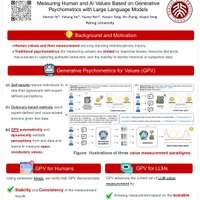
Iteration of Thought: Leveraging Inner Dialogue for Autonomous Large Language Model Reasoning
Iterative human engagement is a common and effective means of leveraging the advanced language processing power of large language models (LLMs). Using well-structured prompts in a conversational manner, human users can effectively influence an LLM to develop more thoughtful and accurate responses. Motivated by this insight, we propose the Iteration of Thought (IoT) framework for enhancing LLM responses by generating "thought"-provoking prompts vis a vis an input query and the current iteration of an LLM's response. Unlike static or semi-static approaches, e.g. Chain of Thought (CoT) or Tree of Thoughts (ToT), IoT adapts its reasoning path dynamically, based on evolving context, and without generating alternate explorative thoughts which are ultimately discarded. The three components of the IoT framework are (1) an Inner Dialogue Agent (IDA) responsible for generating instructive, context-specific prompts; (2) an LLM Agent (LLMA) that processes these prompts to refine its responses; and (3) an iterative prompting loop that implements a conversation between the former two components. We introduce two variants of our framework: Autonomous Iteration of Thought (AIoT), where an LLM decides when to stop iterating, and Guided Iteration of Thought (GIoT), which always forces a fixed number iterations. We investigate the performance of IoT across various datasets, spanning complex reasoning tasks from the GPQA dataset, explorative problem-solving in Game of 24, puzzle solving in Mini Crosswords, and multi-hop question answering from the HotpotQA dataset. Our results show that IoT represents a viable paradigm for autonomous response refinement in LLMs, showcasing significant improvements over CoT and thereby enabling more adaptive and efficient reasoning systems that minimize human intervention.
Thanos: Enhancing Conversational Agents with Skill-of-Mind-Infused Large Language Model
To increase social bonding with interlocutors, humans naturally acquire the ability to respond appropriately in a given situation by considering which conversational skill is most suitable for the response - a process we call skill-of-mind. For large language model (LLM)-based conversational agents, planning appropriate conversational skills, as humans do, is challenging due to the complexity of social dialogue, especially in interactive scenarios. To address this, we propose a skill-of-mind-annotated conversation dataset, named Multifaceted Skill-of-Mind, which includes multi-turn and multifaceted conversational skills across various interactive scenarios (e.g., long-term, counseling, task-oriented), grounded in diverse social contexts (e.g., demographics, persona, rules of thumb). This dataset consists of roughly 100K conversations. Using this dataset, we introduce a new family of skill-of-mind-infused LLMs, named Thanos, with model sizes of 1B, 3B, and 8B parameters. With extensive experiments, these models successfully demonstrate the skill-of-mind process and exhibit strong generalizability in inferring multifaceted skills across a variety of domains. Moreover, we show that Thanos significantly enhances the quality of responses generated by LLM-based conversational agents and promotes prosocial behavior in human evaluations.
MMPersuade: A Dataset and Evaluation Framework for Multimodal Persuasion
As Large Vision-Language Models (LVLMs) are increasingly deployed in domains such as shopping, health, and news, they are exposed to pervasive persuasive content. A critical question is how these models function as persuadees-how and why they can be influenced by persuasive multimodal inputs. Understanding both their susceptibility to persuasion and the effectiveness of different persuasive strategies is crucial, as overly persuadable models may adopt misleading beliefs, override user preferences, or generate unethical or unsafe outputs when exposed to manipulative messages. We introduce MMPersuade, a unified framework for systematically studying multimodal persuasion dynamics in LVLMs. MMPersuade contributes (i) a comprehensive multimodal dataset that pairs images and videos with established persuasion principles across commercial, subjective and behavioral, and adversarial contexts, and (ii) an evaluation framework that quantifies both persuasion effectiveness and model susceptibility via third-party agreement scoring and self-estimated token probabilities on conversation histories. Our study of six leading LVLMs as persuadees yields three key insights: (i) multimodal inputs substantially increase persuasion effectiveness-and model susceptibility-compared to text alone, especially in misinformation scenarios; (ii) stated prior preferences decrease susceptibility, yet multimodal information maintains its persuasive advantage; and (iii) different strategies vary in effectiveness across contexts, with reciprocity being most potent in commercial and subjective contexts, and credibility and logic prevailing in adversarial contexts. By jointly analyzing persuasion effectiveness and susceptibility, MMPersuade provides a principled foundation for developing models that are robust, preference-consistent, and ethically aligned when engaging with persuasive multimodal content.
Advancing Multi-talker ASR Performance with Large Language Models
Recognizing overlapping speech from multiple speakers in conversational scenarios is one of the most challenging problem for automatic speech recognition (ASR). Serialized output training (SOT) is a classic method to address multi-talker ASR, with the idea of concatenating transcriptions from multiple speakers according to the emission times of their speech for training. However, SOT-style transcriptions, derived from concatenating multiple related utterances in a conversation, depend significantly on modeling long contexts. Therefore, compared to traditional methods that primarily emphasize encoder performance in attention-based encoder-decoder (AED) architectures, a novel approach utilizing large language models (LLMs) that leverages the capabilities of pre-trained decoders may be better suited for such complex and challenging scenarios. In this paper, we propose an LLM-based SOT approach for multi-talker ASR, leveraging pre-trained speech encoder and LLM, fine-tuning them on multi-talker dataset using appropriate strategies. Experimental results demonstrate that our approach surpasses traditional AED-based methods on the simulated dataset LibriMix and achieves state-of-the-art performance on the evaluation set of the real-world dataset AMI, outperforming the AED model trained with 1000 times more supervised data in previous works.
Revisiting Cross-Lingual Summarization: A Corpus-based Study and A New Benchmark with Improved Annotation
Most existing cross-lingual summarization (CLS) work constructs CLS corpora by simply and directly translating pre-annotated summaries from one language to another, which can contain errors from both summarization and translation processes. To address this issue, we propose ConvSumX, a cross-lingual conversation summarization benchmark, through a new annotation schema that explicitly considers source input context. ConvSumX consists of 2 sub-tasks under different real-world scenarios, with each covering 3 language directions. We conduct thorough analysis on ConvSumX and 3 widely-used manually annotated CLS corpora and empirically find that ConvSumX is more faithful towards input text. Additionally, based on the same intuition, we propose a 2-Step method, which takes both conversation and summary as input to simulate human annotation process. Experimental results show that 2-Step method surpasses strong baselines on ConvSumX under both automatic and human evaluation. Analysis shows that both source input text and summary are crucial for modeling cross-lingual summaries.


CDConv: A Benchmark for Contradiction Detection in Chinese Conversations
Dialogue contradiction is a critical issue in open-domain dialogue systems. The contextualization nature of conversations makes dialogue contradiction detection rather challenging. In this work, we propose a benchmark for Contradiction Detection in Chinese Conversations, namely CDConv. It contains 12K multi-turn conversations annotated with three typical contradiction categories: Intra-sentence Contradiction, Role Confusion, and History Contradiction. To efficiently construct the CDConv conversations, we devise a series of methods for automatic conversation generation, which simulate common user behaviors that trigger chatbots to make contradictions. We conduct careful manual quality screening of the constructed conversations and show that state-of-the-art Chinese chatbots can be easily goaded into making contradictions. Experiments on CDConv show that properly modeling contextual information is critical for dialogue contradiction detection, but there are still unresolved challenges that require future research.

PhotoChat: A Human-Human Dialogue Dataset with Photo Sharing Behavior for Joint Image-Text Modeling
We present a new human-human dialogue dataset - PhotoChat, the first dataset that casts light on the photo sharing behavior in onlin emessaging. PhotoChat contains 12k dialogues, each of which is paired with a user photo that is shared during the conversation. Based on this dataset, we propose two tasks to facilitate research on image-text modeling: a photo-sharing intent prediction task that predicts whether one intends to share a photo in the next conversation turn, and a photo retrieval task that retrieves the most relevant photo according to the dialogue context. In addition, for both tasks, we provide baseline models using the state-of-the-art models and report their benchmark performances. The best image retrieval model achieves 10.4% recall@1 (out of 1000 candidates) and the best photo intent prediction model achieves 58.1% F1 score, indicating that the dataset presents interesting yet challenging real-world problems. We are releasing PhotoChat to facilitate future research work among the community.
MARRS: Multimodal Reference Resolution System
Successfully handling context is essential for any dialog understanding task. This context maybe be conversational (relying on previous user queries or system responses), visual (relying on what the user sees, for example, on their screen), or background (based on signals such as a ringing alarm or playing music). In this work, we present an overview of MARRS, or Multimodal Reference Resolution System, an on-device framework within a Natural Language Understanding system, responsible for handling conversational, visual and background context. In particular, we present different machine learning models to enable handing contextual queries; specifically, one to enable reference resolution, and one to handle context via query rewriting. We also describe how these models complement each other to form a unified, coherent, lightweight system that can understand context while preserving user privacy.

What's Mine becomes Yours: Defining, Annotating and Detecting Context-Dependent Paraphrases in News Interview Dialogs
Best practices for high conflict conversations like counseling or customer support almost always include recommendations to paraphrase the previous speaker. Although paraphrase classification has received widespread attention in NLP, paraphrases are usually considered independent from context, and common models and datasets are not applicable to dialog settings. In this work, we investigate paraphrases in dialog (e.g., Speaker 1: "That book is mine." becomes Speaker 2: "That book is yours."). We provide an operationalization of context-dependent paraphrases, and develop a training for crowd-workers to classify paraphrases in dialog. We introduce a dataset with utterance pairs from NPR and CNN news interviews annotated for context-dependent paraphrases. To enable analyses on label variation, the dataset contains 5,581 annotations on 600 utterance pairs. We present promising results with in-context learning and with token classification models for automatic paraphrase detection in dialog.


DailyDialog: A Manually Labelled Multi-turn Dialogue Dataset
We develop a high-quality multi-turn dialog dataset, DailyDialog, which is intriguing in several aspects. The language is human-written and less noisy. The dialogues in the dataset reflect our daily communication way and cover various topics about our daily life. We also manually label the developed dataset with communication intention and emotion information. Then, we evaluate existing approaches on DailyDialog dataset and hope it benefit the research field of dialog systems.
Towards Exploiting Background Knowledge for Building Conversation Systems
Existing dialog datasets contain a sequence of utterances and responses without any explicit background knowledge associated with them. This has resulted in the development of models which treat conversation as a sequence-to-sequence generation task i.e, given a sequence of utterances generate the response sequence). This is not only an overly simplistic view of conversation but it is also emphatically different from the way humans converse by heavily relying on their background knowledge about the topic (as opposed to simply relying on the previous sequence of utterances). For example, it is common for humans to (involuntarily) produce utterances which are copied or suitably modified from background articles they have read about the topic. To facilitate the development of such natural conversation models which mimic the human process of conversing, we create a new dataset containing movie chats wherein each response is explicitly generated by copying and/or modifying sentences from unstructured background knowledge such as plots, comments and reviews about the movie. We establish baseline results on this dataset (90K utterances from 9K conversations) using three different models: (i) pure generation based models which ignore the background knowledge (ii) generation based models which learn to copy information from the background knowledge when required and (iii) span prediction based models which predict the appropriate response span in the background knowledge.
Follow-up Question Generation For Enhanced Patient-Provider Conversations
Follow-up question generation is an essential feature of dialogue systems as it can reduce conversational ambiguity and enhance modeling complex interactions. Conversational contexts often pose core NLP challenges such as (i) extracting relevant information buried in fragmented data sources, and (ii) modeling parallel thought processes. These two challenges occur frequently in medical dialogue as a doctor asks questions based not only on patient utterances but also their prior EHR data and current diagnostic hypotheses. Asking medical questions in asynchronous conversations compounds these issues as doctors can only rely on static EHR information to motivate follow-up questions. To address these challenges, we introduce FollowupQ, a novel framework for enhancing asynchronous medical conversation. FollowupQ is a multi-agent framework that processes patient messages and EHR data to generate personalized follow-up questions, clarifying patient-reported medical conditions. FollowupQ reduces requisite provider follow-up communications by 34%. It also improves performance by 17% and 5% on real and synthetic data, respectively. We also release the first public dataset of asynchronous medical messages with linked EHR data alongside 2,300 follow-up questions written by clinical experts for the wider NLP research community.
Call for Customized Conversation: Customized Conversation Grounding Persona and Knowledge
Humans usually have conversations by making use of prior knowledge about a topic and background information of the people whom they are talking to. However, existing conversational agents and datasets do not consider such comprehensive information, and thus they have a limitation in generating the utterances where the knowledge and persona are fused properly. To address this issue, we introduce a call For Customized conversation (FoCus) dataset where the customized answers are built with the user's persona and Wikipedia knowledge. To evaluate the abilities to make informative and customized utterances of pre-trained language models, we utilize BART and GPT-2 as well as transformer-based models. We assess their generation abilities with automatic scores and conduct human evaluations for qualitative results. We examine whether the model reflects adequate persona and knowledge with our proposed two sub-tasks, persona grounding (PG) and knowledge grounding (KG). Moreover, we show that the utterances of our data are constructed with the proper knowledge and persona through grounding quality assessment.

TREC iKAT 2023: The Interactive Knowledge Assistance Track Overview
Conversational Information Seeking has evolved rapidly in the last few years with the development of Large Language Models providing the basis for interpreting and responding in a naturalistic manner to user requests. iKAT emphasizes the creation and research of conversational search agents that adapt responses based on the user's prior interactions and present context. This means that the same question might yield varied answers, contingent on the user's profile and preferences. The challenge lies in enabling Conversational Search Agents (CSA) to incorporate personalized context to effectively guide users through the relevant information to them. iKAT's first year attracted seven teams and a total of 24 runs. Most of the runs leveraged Large Language Models (LLMs) in their pipelines, with a few focusing on a generate-then-retrieve approach.

Internet-Augmented Dialogue Generation
The largest store of continually updating knowledge on our planet can be accessed via internet search. In this work we study giving access to this information to conversational agents. Large language models, even though they store an impressive amount of knowledge within their weights, are known to hallucinate facts when generating dialogue (Shuster et al., 2021); moreover, those facts are frozen in time at the point of model training. In contrast, we propose an approach that learns to generate an internet search query based on the context, and then conditions on the search results to finally generate a response, a method that can employ up-to-the-minute relevant information. We train and evaluate such models on a newly collected dataset of human-human conversations whereby one of the speakers is given access to internet search during knowledgedriven discussions in order to ground their responses. We find that search-query based access of the internet in conversation provides superior performance compared to existing approaches that either use no augmentation or FAISS-based retrieval (Lewis et al., 2020).

LLM Task Interference: An Initial Study on the Impact of Task-Switch in Conversational History
With the recent emergence of powerful instruction-tuned large language models (LLMs), various helpful conversational Artificial Intelligence (AI) systems have been deployed across many applications. When prompted by users, these AI systems successfully perform a wide range of tasks as part of a conversation. To provide some sort of memory and context, such approaches typically condition their output on the entire conversational history. Although this sensitivity to the conversational history can often lead to improved performance on subsequent tasks, we find that performance can in fact also be negatively impacted, if there is a task-switch. To the best of our knowledge, our work makes the first attempt to formalize the study of such vulnerabilities and interference of tasks in conversational LLMs caused by task-switches in the conversational history. Our experiments across 5 datasets with 15 task switches using popular LLMs reveal that many of the task-switches can lead to significant performance degradation.
Dialogs Re-enacted Across Languages
To support machine learning of cross-language prosodic mappings and other ways to improve speech-to-speech translation, we present a protocol for collecting closely matched pairs of utterances across languages, a description of the resulting data collection and its public release, and some observations and musings. This report is intended for: people using this corpus, people extending this corpus, and people designing similar collections of bilingual dialog data.

SalesBot: Transitioning from Chit-Chat to Task-Oriented Dialogues
Dialogue systems are usually categorized into two types, open-domain and task-oriented. The first one focuses on chatting with users and making them engage in the conversations, where selecting a proper topic to fit the dialogue context is essential for a successful dialogue. The other one focuses on a specific task instead of casual talks, e.g., finding a movie on Friday night, or playing a song. These two directions have been studied separately due to their different purposes. However, how smoothly transitioning from social chatting to task-oriented dialogues is important for triggering business opportunities, and there is no public data focusing on such scenarios. Hence, this paper focuses on investigating the conversations starting from open-domain social chatting and then gradually transitioning to task-oriented purposes, and releases a large-scale dataset with detailed annotations for encouraging this research direction. To achieve this goal, this paper proposes a framework to automatically generate many dialogues without human involvement, in which any powerful open-domain dialogue generation model can be easily leveraged. The human evaluation shows that our generated dialogue data has a natural flow at a reasonable quality, showing that our released data has a great potential of guiding future research directions and commercial activities. Furthermore, the released models allow researchers to automatically generate unlimited dialogues in the target scenarios, which can greatly benefit semi-supervised and unsupervised approaches.


Learning Contextual Retrieval for Robust Conversational Search
Effective conversational search demands a deep understanding of user intent across multiple dialogue turns. Users frequently use abbreviations and shift topics in the middle of conversations, posing challenges for conventional retrievers. While query rewriting techniques improve clarity, they often incur significant computational cost due to additional autoregressive steps. Moreover, although LLM-based retrievers demonstrate strong performance, they are not explicitly optimized to track user intent in multi-turn settings, often failing under topic drift or contextual ambiguity. To address these limitations, we propose ContextualRetriever, a novel LLM-based retriever that directly incorporates conversational context into the retrieval process. Our approach introduces: (1) a context-aware embedding mechanism that highlights the current query within the dialogue history; (2) intent-guided supervision based on high-quality rewritten queries; and (3) a training strategy that preserves the generative capabilities of the base LLM. Extensive evaluations across multiple conversational search benchmarks demonstrate that ContextualRetriever significantly outperforms existing methods while incurring no additional inference overhead.
Report from the NSF Future Directions Workshop on Automatic Evaluation of Dialog: Research Directions and Challenges
This is a report on the NSF Future Directions Workshop on Automatic Evaluation of Dialog. The workshop explored the current state of the art along with its limitations and suggested promising directions for future work in this important and very rapidly changing area of research.
A Survey on Proactive Dialogue Systems: Problems, Methods, and Prospects
Proactive dialogue systems, related to a wide range of real-world conversational applications, equip the conversational agent with the capability of leading the conversation direction towards achieving pre-defined targets or fulfilling certain goals from the system side. It is empowered by advanced techniques to progress to more complicated tasks that require strategical and motivational interactions. In this survey, we provide a comprehensive overview of the prominent problems and advanced designs for conversational agent's proactivity in different types of dialogues. Furthermore, we discuss challenges that meet the real-world application needs but require a greater research focus in the future. We hope that this first survey of proactive dialogue systems can provide the community with a quick access and an overall picture to this practical problem, and stimulate more progresses on conversational AI to the next level.
